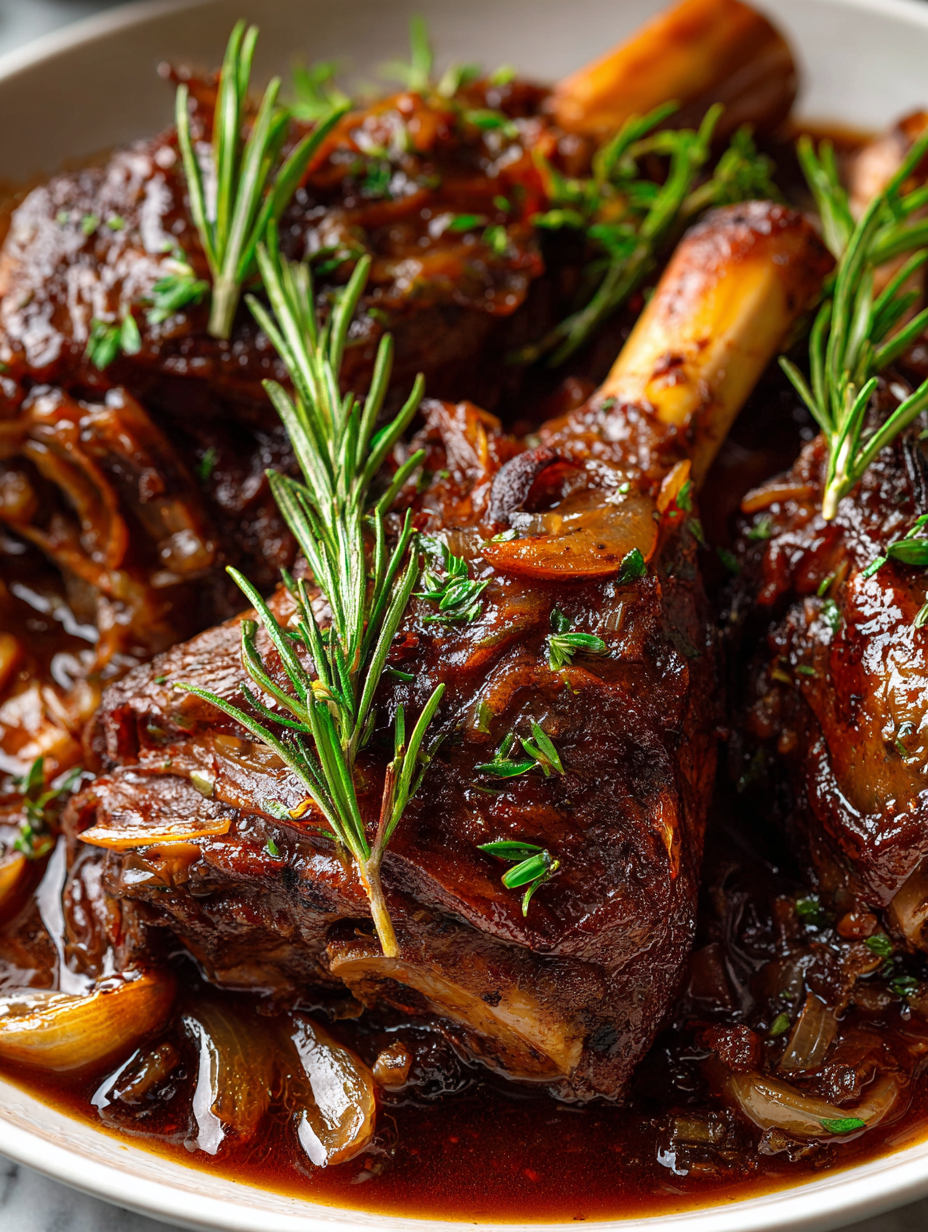
Ingredients
Equipment
Method
- Pat the lamb shanks dry with paper towels to ensure they sear properly. Heat a Dutch oven over medium-high heat and add olive oil. Once shimmering, sear the shanks until deeply golden brown on all sides, about 4-5 minutes per batch, then remove and set aside.
- Add chopped onions, carrots, and celery to the same pot. Cook over medium heat, stirring occasionally, until the vegetables soften and become fragrant, about 8-10 minutes. The aroma will deepen as they caramelize slightly.
- Stir in crushed garlic and cook for 30 seconds until fragrant. Pour in the red wine, scraping up any browned bits from the bottom of the pot. Bring the wine to a boil and let it reduce by half, about 5-7 minutes, until it thickens slightly and deepens in color.
- Return the seared lamb shanks to the pot, nestling them among the vegetables. Add sprigs of thyme and rosemary, then pour in the broth until the liquid reaches halfway up the meat. Cover with a lid or foil.
- Transfer the covered Dutch oven to a preheated oven at 160°C (320°F). Braise the shanks for 2.5 to 3 hours, turning them once halfway through. The kitchen will fill with a smoky, wine-scented aroma as the meat becomes tender and infused with flavor.
- Check the lamb for doneness by inserting a fork — it should slide in easily, and the meat will be falling off the bone. If the sauce is too thin, uncover and simmer on the stove for 10-15 minutes to thicken it into a glossy, velvety coating.
- Remove the shanks from the oven and let them rest for 10 minutes. Skim any excess fat from the surface of the sauce for a balanced, silky finish. Serve the lamb shanks hot, spooning the rich sauce over each portion, with crusty bread or mashed potatoes on the side.
Notes
For an extra layer of flavor, add a splash of balsamic vinegar at the end. Using bone-in shanks enhances the richness, but boneless can be used for easier handling. Make ahead by searing and prepping vegetables in advance; reheat gently to preserve tenderness.