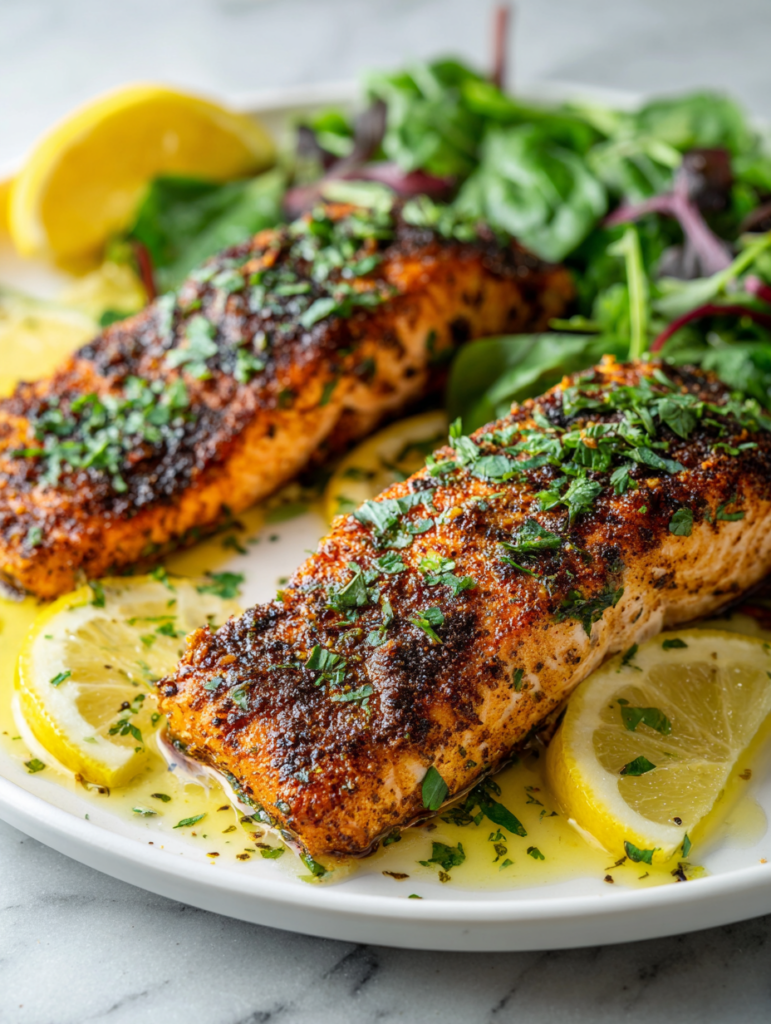
Blackened salmon is one of those dishes that feels like a bold statement, but it’s surprisingly simple to pull off at home. The smoky, spicy crust transforms everyday fish into something memorable, especially when you get that perfect sear. It’s a technique I keep coming back to when I want dinner to impress without fuss.
What I love about this recipe is how the heat from the spices dances with the tender, flaky flesh of the salmon. It’s a flavor combo that hits you in the best way—smoky, spicy, with a touch of char that makes everything feel a little more special. Plus, it’s quick enough for weeknights but bold enough for weekend cravings.
This isn’t just about the taste; it’s about the experience—the crackle of the crust, the aroma of spices filling the kitchen, and that satisfying moment when you cut into a perfectly cooked fillet. It’s a reminder that simple ingredients, handled right, can turn into something unforgettable.
Focusing on how the smoky, spicy crust of blackened salmon can transform a simple weeknight dinner into a bold sensory experience, highlighting the balance between heat, spice, and the tender, flaky fish beneath.
The unexpected depth of smoky spice
- Blackened salmon feels like a rebellious twist on a classic, and I love how the crust crackles with spice.
- There’s a rush of pride when I get that perfect sear, golden and smoky, every single time.
- This dish takes me back to summer nights by the grill, where everything feels a little more alive.
- I get excited just thinking about how the smoky aroma fills the kitchen, making everyone come running.
- Nothing beats that moment when you cut into a flaky, spicy crust—pure satisfaction.
The inspiration behind this dish
This recipe came together on a night when I was craving something smoky and bold, but didn’t want to fuss with complicated techniques. I remember the first time I seasoned a piece of salmon and let it sit in the spice mix, then heard that satisfying crackle as it hit the hot pan. The aroma that filled the kitchen—smoky, spicy, just a hint of char—took me right back to late summer evenings grilling outside. It’s become my go-to for nights when I want to feel a little more rebellious and a lot more satisfied.
Blackened Salmon Trivia
- The term ‘blackened’ originates from Cajun cuisine, where fish and meats were coated in spices and cooked quickly over high heat, creating a charred crust.
- Chef Paul Prudhomme popularized blackened dishes in the 1980s, turning it into a culinary trend across the U.S. with his bold seasonings and techniques.
- The smoky, spicy crust was originally a way to add flavor and preserve fish before refrigeration, turning simple ingredients into complex-tasting dishes.
- Blackening isn’t just about heat; it’s a technique that combines seasoning with careful pan control to develop a flavorful crust without burning.
- Despite its spicy and smoky reputation, the process is surprisingly forgiving, making it a favorite for home cooks looking for bold flavors.
Ingredient breakdown: key components
- Salmon fillet: I prefer skin-on for crispiness, but you can skip it if you like a softer crust. The flesh should be firm and bright pink, ready to soak up all those smoky spices.
- Paprika: I use smoked paprika to add a deep, smoky aroma that fills the kitchen. If you only have sweet paprika, boost the heat with a pinch of cayenne or chipotle powder.
- Blackening spice mix: I mix my own with cumin, garlic powder, onion powder, cayenne, and thyme—adjust the cayenne for your heat preference. The spice should smell bold and fragrant, not dull or dusty.
- Oil: I stick with a high-smoke-point oil like canola or vegetable to get that quick, hot sear. It should shimmer when the pan’s hot, signaling it’s ready for the fish.
- Lemon: Bright, zesty lemon juice is my finish to cut through the spice and add freshness. Squeeze it right before serving for that vibrant pop.
- Optional herbs: Chopped parsley or cilantro adds a fresh contrast. Sprinkle just before plating to keep their vibrant color and flavor alive.
- Cast iron skillet: I love using cast iron for its heat retention and charred finish, but a heavy stainless steel pan will do if you don’t have one. Make sure it’s hot enough for a good sear—around 200°C (400°F).
Spotlight on key ingredients
Paprika:
- Salmon fillet: I prefer skin-on for crispiness, but you can skip it if you like a softer crust. The flesh should be firm and bright pink, ready to soak up all those smoky spices.
- I use smoked paprika to add a deep, smoky aroma that fills the kitchen. If you only have sweet paprika, boost the heat with a pinch of cayenne or chipotle powder.
- Blackening spice mix: I mix my own with cumin, garlic powder, onion powder, cayenne, and thyme—adjust the cayenne for your heat preference. The spice should smell bold and fragrant, not dull or dusty.
Blackening spice mix:
- Salmon fillet: I prefer skin-on for crispiness, but you can skip it if you like a softer crust. The flesh should be firm and bright pink, ready to soak up all those smoky spices.
- I mix my own with cumin, garlic powder, onion powder, cayenne, and thyme—adjust the cayenne for your heat preference. The spice should smell bold and fragrant, not dull or dusty.
Notes for ingredient swaps
- Fresh Salmon: I look for bright, firm flesh with a mild smell. You can use frozen fillets, but thaw thoroughly first for even seasoning.
- Paprika: I prefer smoked paprika for that deep, smoky aroma. If you only have sweet paprika, add a pinch of chipotle or cayenne for heat.
- Blackening Spice Mix: I make my own with cumin, garlic, onion powder, cayenne, and thyme. Adjust cayenne to tame or boost the heat.
- Oil: I use canola or vegetable oil for high smoke point and neutral flavor. Olive oil works in a pinch but may smoke sooner—watch carefully.
- Lemon: Bright, zesty lemon juice adds freshness. Lime can replace it for a slightly different citrus punch, but skip if you want less tang.
- Herbs: Fresh parsley or cilantro add a vibrant finish. Dried herbs can be used but are less bright—add just before serving for best flavor.
- Pan Choice: Cast iron gives great crust and heat retention, but stainless steel can do the job. Make sure your pan is hot enough for a good sear—around 200°C (400°F).
Equipment & Tools
- Cast iron skillet: Provides even heat and a crispy sear
- Tongs: To flip the fish without breaking it
- Small bowl: Mix and hold the spice blend
- Spoon: To drizzle or baste oil if needed
- Plate: Rest the cooked fish
Step-by-step guide to blackened salmon
- Equipment & tools: Use a cast iron skillet for even heat and good sear; tongs for flipping; a small bowl for spice mix; a spoon for oil; a plate for resting.
- Pat the salmon dry with paper towels; season generously with your blackening spice mix on all sides. Let sit for 10 minutes to enhance flavor absorption.
- Heat the skillet over medium-high heat until it’s hot—about 200°C (400°F). Add a thin layer of high-smoke-point oil and swirl to coat.
- Carefully place the salmon fillet skin-side down if applicable. You should hear an immediate crackle. Sear for 3-4 minutes, until the crust develops a dark, smoky color.
- Flip the fillet using tongs. Cook for another 2-3 minutes, checking for a slightly opaque center if you prefer medium doneness. If it’s browning too quickly, reduce heat slightly.
- Check for doneness: the fish should jiggle slightly in the center and flake easily when tested with a fork. The crust should be dark but not burnt. If over-browned, lower heat or move to a cooler spot in the pan.
- Remove the fish from the skillet. Rest for 2 minutes on a plate, loosely covered with foil to allow juices to redistribute.
- Finish with a squeeze of lemon and a sprinkle of fresh herbs. Serve immediately to enjoy that crispy crust and tender inside.
Rest the salmon for 2 minutes to let juices settle. Finish with fresh lemon juice and herbs. Plate with a side of greens or grains to balance the spice and heat.
How to Know It’s Done
- Crust is deep, dark, and smoky with a slight char.
- Fish flakes easily with a fork but remains moist inside.
- Internal temperature reaches 52-54°C (125-130°F) for medium doneness.
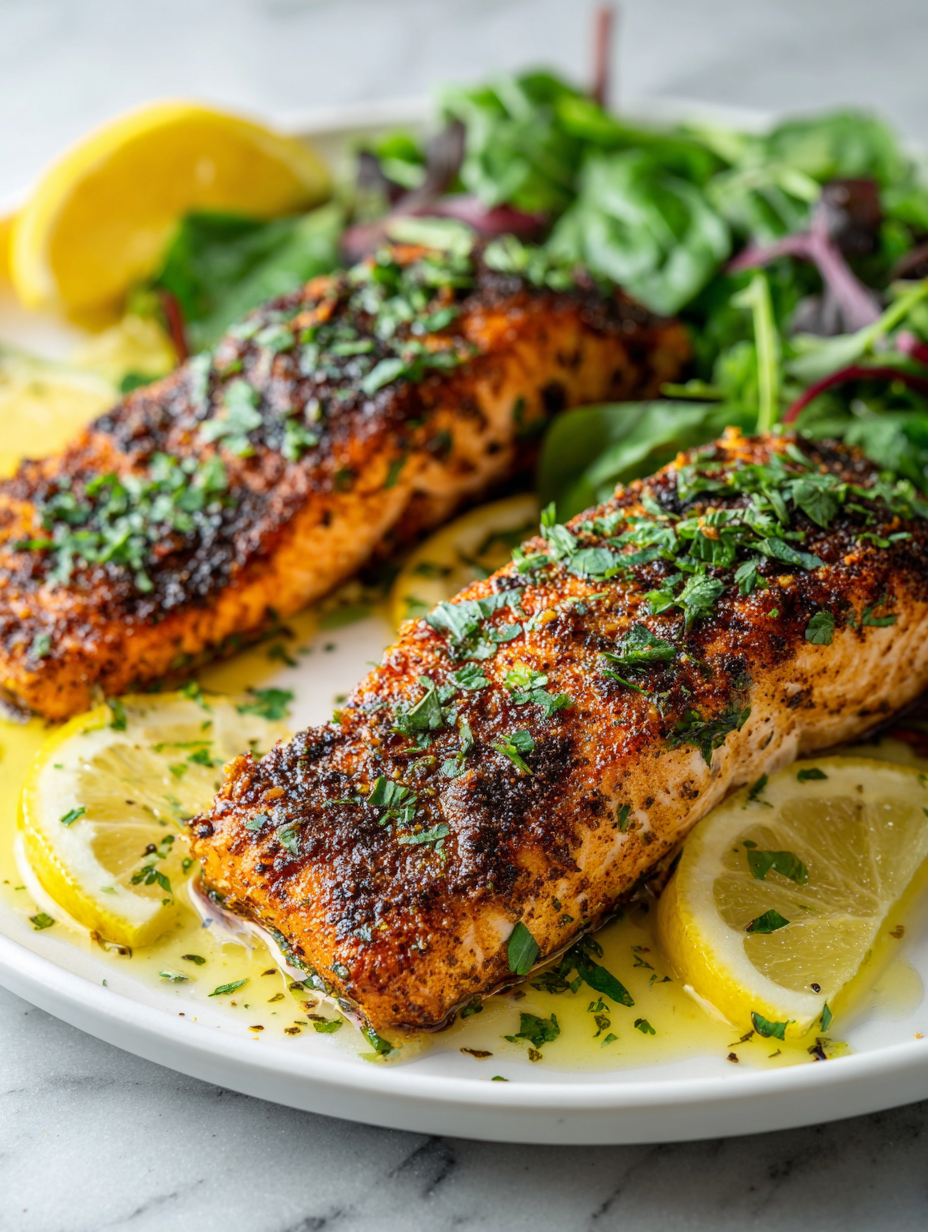
Blackened Salmon
Ingredients
Equipment
Method
- Pat the salmon fillets dry with paper towels to remove excess moisture, which helps the spice crust stick better.
- Mix together smoked paprika, cumin, garlic powder, onion powder, cayenne pepper, and thyme in a small bowl to create your blackening spice blend.
- Generously coat each salmon fillet with the spice mixture, pressing it onto all sides to ensure an even, flavorful crust. Let sit for about 10 minutes to allow the flavors to meld.
- Heat your cast iron skillet over medium-high heat until it’s hot—look for a shimmering surface and a faint smoky aroma, around 200°C (400°F).
- Add a thin layer of high-smoke-point oil to the skillet and swirl to coat evenly. You should hear a loud sizzle as the oil heats up.
- Carefully place the salmon fillets skin-side down if applicable. You’ll hear a crackling sound as the crust starts to sear and develop a dark, smoky color within 3-4 minutes.
- Flip the fillets gently using tongs and cook for another 2-3 minutes, just until the fish is opaque in the center and flakes easily with a fork. The crust should remain dark and crispy, but not burnt.
- Remove the fillets from the skillet and rest on a plate for 2 minutes to allow the juices to redistribute, keeping the inside moist and tender.
- Squeeze fresh lemon juice over the salmon and sprinkle with chopped herbs for a bright, fresh finish. Serve immediately to enjoy the crispy crust and flaky interior.
Pro tips for perfect blackened salmon
- sear: Ensure pan is thoroughly preheated to around 200°C (400°F) before adding fish for that perfect crust.
- Crackling sound: You should hear a loud sizzle when the fish hits the hot oil—this is a sign of good heat and proper searing.
- Spice crust: Press the spice mix firmly onto the fish to create an even, flavorful coating that sticks during cooking.
- Avoid burning: If spices start to turn dark or smell bitter, lower the heat slightly to prevent burning the crust.
- Timing is key: Sear skin-side down for 3-4 minutes until dark and crispy, then flip carefully to avoid breakage.
- Rest properly: Let the fish rest for 2 minutes after cooking to allow juices to redistribute and keep it moist.
- Finish with zest: A squeeze of lemon before serving brightens the smoky, spicy flavors and adds a fresh contrast.
Common mistakes and how to fix them
- FORGOT to preheat the pan → Always heat to hot before adding fish.
- DUMPED spice mix too early → Wait until pan is hot for best crust development.
- OVER-TORCHED the crust → Lower heat if spices burn or turn bitter.
- MISSED resting time → Rest fish 2 minutes for juices to settle and stay moist.
Quick fixes and pantry swaps
- If the crust isn’t dark enough, increase heat and sear a bit longer.
- When spices burn quickly, lower the heat to prevent bitterness.
- Splash some water in the pan if the fish sticks—helps release stuck bits and cools.
- Patch a flaky crust by pressing spices back onto the fish quickly during searing.
- Shield fish with foil if it starts to over-brown before cooking through.
Prep, store, and reheat tips
- Prep the spice mix and season the salmon a day ahead; keep covered in the fridge to let flavors meld and deepen, and enjoy the smoky aroma as it sits.
- Store cooked salmon fillets in an airtight container in the fridge for up to 2 days; the spice crust may soften slightly, but reheating keeps the flavors intact.
- Reheat gently in a hot skillet for 1-2 minutes, just enough to bring back some crispness and warmth, while avoiding overcooking and drying out the fish.
- The spice crust can develop more intensity overnight, so adjust seasoning if you prep ahead, but be mindful of potential bitterness if left too long.
- For longer storage, freeze cooked or uncooked fillets individually wrapped; defrost overnight in the fridge and reheat carefully for best texture and flavor.
Top questions about blackened salmon
1. How do I select good salmon for blackening?
Look for bright, firm flesh with a mild smell. Thaw frozen fillets thoroughly for even seasoning.
2. Can I use regular paprika instead of smoked?
Use smoked paprika for a deep smoky aroma. If you only have sweet paprika, add a pinch of cayenne or chipotle.
3. Should I dry the salmon before seasoning?
Pat the salmon dry, then coat with the spice mix. Let it sit for about 10 minutes before cooking.
4. How hot should the pan be for searing?
Preheat your cast iron to about 200°C (400°F). Sear the fish skin-side down for 3-4 minutes until dark and crispy.
5. How do I know when the salmon is done?
Cook until the fish flakes easily with a fork and the crust is dark and smoky, about 5-7 minutes total.
6. Should I rest the salmon after cooking?
Rest the fish for 2 minutes after cooking. Finish with a squeeze of lemon and herbs for brightness.
7. How long can I keep cooked blackened salmon?
Store leftovers in an airtight container in the fridge for up to 2 days. Reheat gently in a hot skillet.
8. What if the spice crust burns too quickly?
If the spices burn, lower the heat and sear in smaller batches. Splash water to cool if needed.
9. Can I use olive oil for searing?
Use high-smoke-point oils like canola or vegetable. Olive oil can work but may smoke sooner—watch carefully.
10. How do I make the spice less spicy?
Adjust the cayenne or spice amount to control heat. For milder flavor, reduce or omit cayenne.
Cooking this blackened salmon is a reminder that simple techniques can turn ingredients into something memorable. The smoky crust, the tender flesh—each bite is a small celebration of flavor and fire.
In a world of quick fixes and fleeting trends, this dish stands out because it’s honest, bold, and rooted in technique. It’s a recipe I return to when I want a meal that feels both satisfying and a little rebellious.
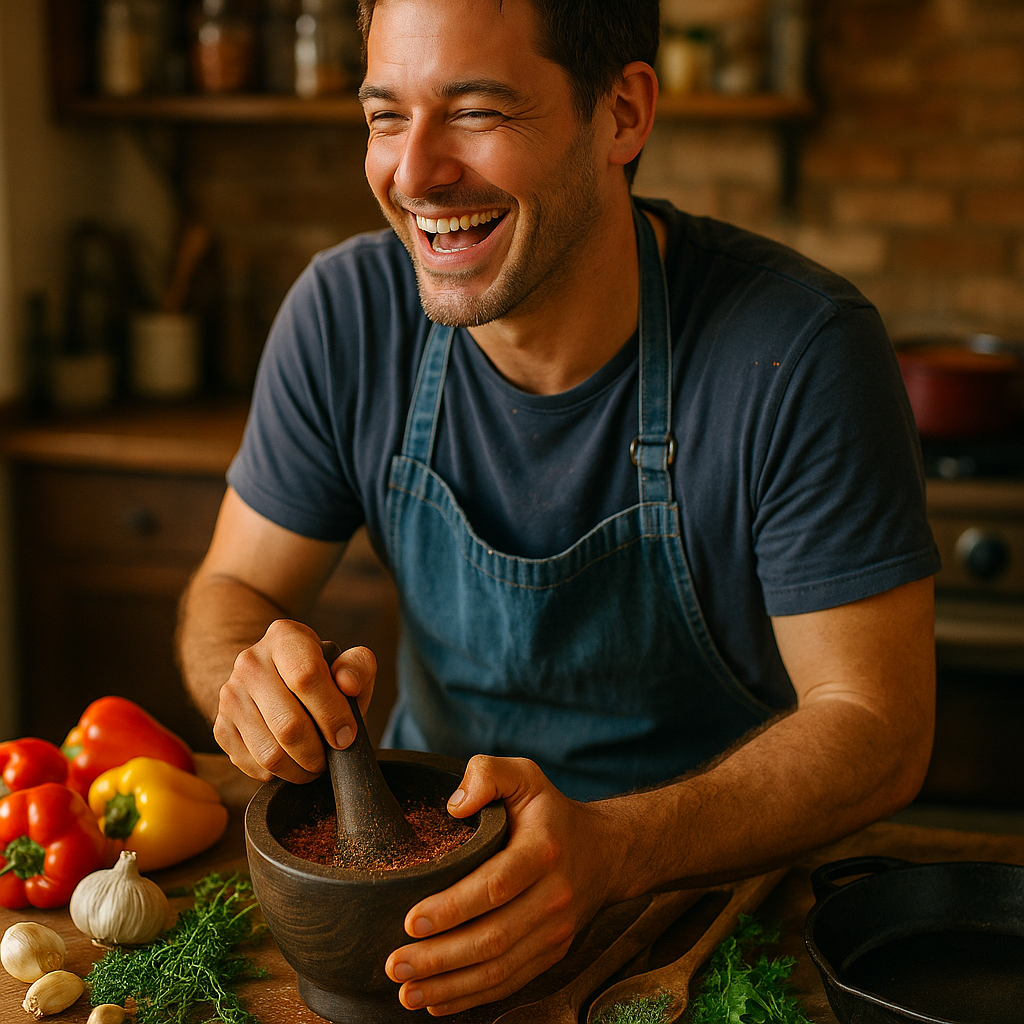
Hi, I’m Theo Granger, a former line cook and unapologetic flavor maximalist from New Orleans. I believe there are two types of people in this world: those who season their food, and those who LIVE to season their food. This blog is for the latter.