
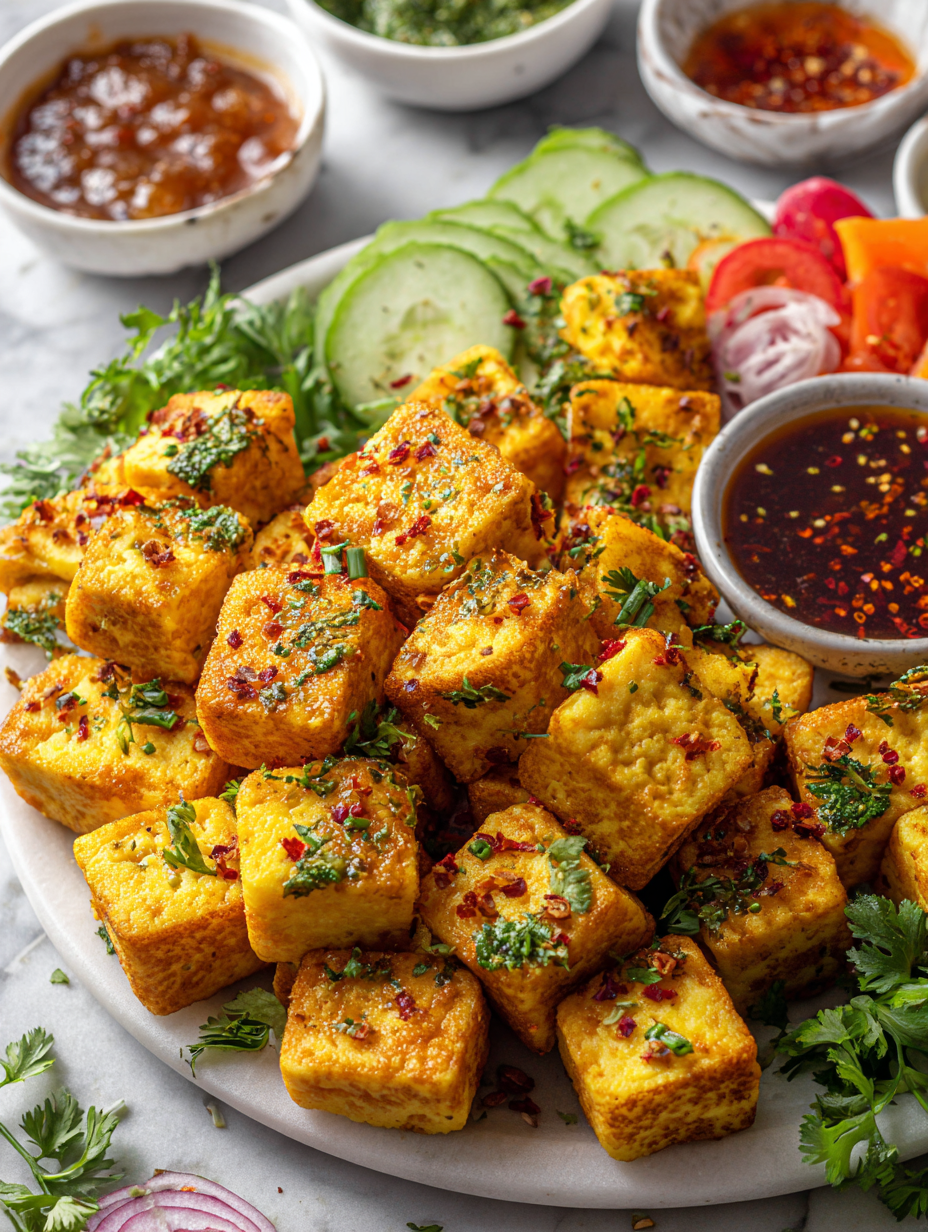
This Paneer Snack Plate is my answer to those evenings when I want something quick, satisfying, and a little bit special. I love how paneer can be transformed into a variety of textures—crispy, creamy, spiced—and all on one platter. It’s perfect for impromptu get-togethers or when I need a snack that feels like a small celebration.
There’s something honest about working with simple ingredients and elevating them with just a few herbs, spices, and a bit of know-how. This dish isn’t about perfection; it’s about the joy of mixing and matching, tasting as you go, and finding that perfect balance of flavors and textures in every bite.
It’s a reminder that even the simplest ingredients, like fresh paneer, can shine brightly when handled with care and a bit of curiosity. No fancy tricks needed—just a good eye for what works and a willingness to play in the kitchen. It’s a recipe that feels like a small, flavorful adventure, no matter how many times I make it.
Focusing on the art of transforming simple paneer into a versatile snack platter that balances textures and flavors, making it a go-to for impromptu gatherings or a quick, satisfying bite when time is tight.
The story behind this recipe
One afternoon, I was experimenting with how to make snack platters more interesting for a casual get-together. I realized that paneer, with its mild flavor and firm texture, can be a blank canvas—pan-fried, marinated, or even baked—and still hold up. That moment made me think about how often we overlook simple ingredients and their potential to surprise. Now, I keep a stash of paneer in the fridge, ready to turn into something quick, flavorful, and a little unexpected. This dish is my way of celebrating that versatility, turning everyday ingredients into a little feast for the eyes and the palate.
Key ingredients and their quirks
- Paneer: I like using fresh, soft paneer that’s just firm enough to hold its shape. It gets beautifully crispy on the outside, with a mild milky aroma. Try marinating it briefly in spices before frying for extra flavor.
- Chili powder: I prefer a smoky, deep chili that adds warmth without overwhelming. Adjust the amount based on your spice tolerance—start small and build up. It’s the secret to that subtle heat in every bite.
- Cumin seeds: I love the nutty, earthy aroma they release when toasted. Don’t skip this step; it’s what makes the oil fragrant and the dish feel more layered. Toast until they crackle, then add the other ingredients.
- Fresh herbs: Cilantro and mint brighten everything up. I chop them just before serving so they stay vibrant and fragrant. They add a refreshing contrast to the rich paneer.
- Lemon juice: A quick squeeze right before serving lifts the dish with a zingy brightness. Use fresh lemons for that genuine citrus sparkle—don’t skip it, even if you’re tempted to skip the acidity.
- Assorted nuts: I toss in toasted almonds or cashews for crunch. They add a warm, toasted aroma and a satisfying bite. Toast separately to avoid burning and infuse with a hint of butter or ghee.
- Yogurt or chutney: I serve a dollop of tangy yogurt or a spicy chutney on the side. It cuts through the richness and adds a creamy or fiery contrast, depending on your mood.
Spotlight on key ingredients
Cumin seeds:
- Paneer: I love using fresh, soft paneer that’s just firm enough to hold its shape. It gets beautifully crispy on the outside, with a mild milky aroma. Try marinating it briefly in spices before frying for extra flavor.
- Chili powder: I prefer a smoky, deep chili that adds warmth without overwhelming. Adjust the amount based on your spice tolerance—start small and build up. It’s the secret to that subtle heat in every bite.
- I love the nutty, earthy aroma they release when toasted. Don’t skip this step; it’s what makes the oil fragrant and the dish feel more layered. Toast until they crackle, then add the other ingredients.
Notes for ingredient swaps
- Dairy-Free: Coconut or almond-based cheeses can replace paneer, but they won’t have the same firm bite or milky flavor.
- Vegan: Tofu pressed and marinated similarly works well, though it’s softer and less creamy in texture.
- Spice Levels: Adjust chili powder and fresh chilies based on your heat preference—start small, then add more.
- Herbs: Fresh cilantro and mint can be swapped for parsley or basil if those are what you have, though flavor shifts slightly.
- Nuts: Use roasted pumpkin seeds or sunflower seeds instead of nuts for crunch—less rich, but still satisfying.
- Yogurt: Swap with thick coconut cream or a tangy cashew dip for a dairy-free, creamy side.
- Lemon Juice: Lime juice adds a slightly different citrus brightness, if that’s what you’ve got on hand.
Equipment & Tools
- Non-stick skillet or cast-iron pan: For even heating and crispy paneer
- Tongs or spatula: To flip and handle hot paneer
- Small mixing bowl: To mix marinade
- Plate or paper towels: To rest and drain excess oil
Step-by-step guide to paneer snack plate
- Gather your equipment: a non-stick skillet or cast-iron pan, tongs or a spatula, a small bowl for marinade, and a plate for resting.
- Cut paneer into 1-inch cubes. If using store-bought, keep the pieces uniform for even cooking.
- In the small bowl, mix 1 tsp chili powder, 1/2 tsp turmeric, 1/2 tsp salt, and a splash of water or yogurt to make a loose marinade.
- Toss the paneer cubes gently in the marinade, ensuring each piece is coated. Let sit for 10 minutes to absorb flavors.
- Heat the skillet over medium heat to about 160°C (320°F). Add a tablespoon of oil—vegetable or ghee for richness.
- Once hot, add the marinated paneer cubes in a single layer. Cook for 3-4 minutes without moving, until the underside is golden and crispy.
- Flip the paneer with tongs or a spatula. Cook the other sides for another 3-4 minutes, until all sides are crispy and golden.
- If the paneer starts to stick, gently loosen with a spatula and add a splash more oil if needed. Keep an eye on the heat; too high can burn the spices.
- Check for doneness: crispy exterior, a slight jiggle in the center, and a rich, toasted aroma. The paneer should hold shape but be tender inside.
- Remove the paneer from the pan and let it rest on a paper towel for 1-2 minutes. This helps drain excess oil and keeps it crispy.
- Arrange on a platter, garnish with chopped herbs, squeeze fresh lemon over, and serve immediately for best texture and flavor.
Let the paneer rest for 1-2 minutes on a paper towel. Then, transfer to a platter, garnish with herbs, squeeze lemon, and serve immediately while crispy.
How to Know It’s Done
- Crispy, golden exterior on all sides.
- Paneer holds shape but feels tender inside when pressed gently.
- Aromatic spices toasted, with a slight crackle in the pan.
Paneer Snack Plate
Ingredients
Equipment
Method
- Start by cutting your fresh paneer into uniform 1-inch cubes, ensuring each piece is ready for frying.
- In a small bowl, mix chili powder, turmeric, salt, and a splash of water or yogurt to create a loose marinade.
- Toss the paneer cubes gently in the marinade, making sure each piece is coated thoroughly. Let them sit for about 10 minutes to soak up the flavors.
- Heat a non-stick skillet or cast-iron pan over medium heat and add about a tablespoon of oil until shimmering and fragrant.
- Place the marinated paneer cubes in the hot pan in a single layer, making sure not to overcrowd. Cook without moving for 3-4 minutes until the underside turns golden and crispy.
- Use tongs or a spatula to flip the paneer cubes, cooking each side until all are golden and crispy, about 3-4 minutes more. The kitchen should fill with a toasted aroma.
- Once crispy and golden all over, transfer the paneer to a plate lined with paper towels to drain excess oil and keep the pieces crispy.
- Meanwhile, toast some nuts in a dry skillet until fragrant and slightly browned, then roughly chop them for garnish.
- Chop fresh herbs like cilantro and mint just before serving to keep their vibrant aroma and bright flavor.
- Squeeze fresh lemon juice over the fried paneer, then sprinkle with chopped herbs and toasted nuts for added flavor and crunch.
- Serve the hot, crispy paneer cubes on a platter with a side of tangy yogurt or spicy chutney for dipping. Enjoy immediately for maximum crunch and flavor!
Tips for perfect paneer snack plate
- Use fresh paneer: It crisps up beautifully and stays tender inside, with a subtly milky aroma that’s just right.
- Toast spices carefully: Keep an eye on your chili and cumin—they release their fragrance when toasted and can burn quickly if overdone.
- Adjust heat as you go: Medium heat is key—too hot, and the paneer will burn before crisping; too low, and it won’t get that golden crust.
- Oil matters: Use enough oil to coat the pan thinly—this helps achieve that crispy exterior without excess greasiness.
- Rest before serving: Let the fried paneer sit for a minute or two—this drains excess oil and keeps it crisp during plating.
- Garnish last: Squeeze fresh lemon and sprinkle herbs just before serving—this keeps flavors bright and vibrant.
- Don’t overcrowd the pan: Fry in batches if needed—overcrowding cools the pan and makes the paneer soggy instead of crispy.
Common mistakes and how to fix them
- FORGOT to adjust heat → paneer burns quickly, lower heat to medium-low.
- DUMPED marinade too early → let paneer marinate at least 10 minutes for flavor.
- OVER-TORCHED spices → toast spices until fragrant, not darkened or burnt.
- MISSED resting time → rest fried paneer 1-2 minutes for maximum crispness.
Quick fixes and pantry swaps
- When pan feels too hot, splash a little water—if it dances, turn down the heat immediately.
- If paneer sticks, gently loosen with a spatula—avoid force to prevent breaking the pieces.
- Splash a bit of lemon juice if spices burn or become bitter—brightens the flavor instantly.
- Patch over a pan that’s overwhelmed with smoke—turn off heat, open windows, and let it clear.
- Shield overcooked spices with a sprinkle of fresh herbs—calms bitter or burnt notes.
Prep, store, and reheat tips
- Prepare the paneer cubes and marinade a day ahead; keep covered in the fridge for up to 24 hours. The flavors deepen overnight, and it saves time during assembly.
- Store cooked or fried paneer in an airtight container in the fridge for 2-3 days. Reheat in a hot skillet until crispy again, about 2-3 minutes, until it shimmers and crackles.
- Chop herbs and prepare chutneys or yogurt toppings ahead of time. Keep them in separate containers for freshness—herbs stay vibrant for 1-2 days.
- You can assemble the platter a few hours in advance, but add fresh herbs and lemon just before serving to keep everything bright and crisp.
- For longer storage, freeze fried paneer in a sealed bag for up to 1 month. Reheat in a hot oven or skillet to regain crispness and warm aroma—expect a slight change in texture, softer than fresh.
Top questions about paneer snack plate
1. How do I pick good paneer?
Look for fresh, soft paneer that’s just firm enough to hold its shape and gets crispy when fried. It’s the milky aroma that makes a difference.
2. What oil should I use for frying paneer?
Use a neutral oil like vegetable or canola for frying. It crisps well without overpowering the delicate paneer flavors.
3. How long should I marinate the paneer?
Marinate the paneer in spices and a splash of yogurt or water for at least 10 minutes. It absorbs flavors better and crisps evenly.
4. How do I know when the paneer is crispy?
Cook the paneer over medium heat until all sides are golden and crispy, about 3-4 minutes per side. Look for a rich, toasted aroma.
5. When should I add herbs and lemon?
Add fresh herbs and lemon juice just before serving to keep them vibrant and fragrant—this brightens the dish instantly.
6. How do I store and reheat leftover paneer?
Store cooked paneer in an airtight container in the fridge for up to 3 days. Reheat in a hot skillet until crispy again, about 2-3 minutes.
7. Can I substitute nuts?
Use toasted nuts like almonds or cashews for crunch. Toast separately to avoid burning and infuse with a little butter or ghee for extra flavor.
8. How spicy should the dish be?
Adjust the spice level by starting with a small amount of chili powder, then add more to taste. Smoky or deep chili adds warmth without heat overwhelming.
9. Can I substitute lemon with lime?
Use fresh lemon juice for a bright, citrusy zing. Lime juice works well too if that’s what you prefer or have on hand.
10. What if the paneer sticks or gets soggy?
If the paneer sticks to the pan, gently loosen with a spatula and lower the heat. Overcrowding causes sogginess, so fry in batches if needed.
This paneer snack plate isn’t just a quick bite; it’s a little celebration of textures and flavors. The crispy paneer, bright herbs, and zesty lemon make each bite feel fresh and satisfying. It’s perfect for when you want something simple but special enough to share.
In the chaos of weeknights or the calm of weekend gatherings, this platter feels like a small, honest reward. No fuss, just good ingredients turned into something that delights the senses and sparks a bit of joy in the kitchen.

Hi, I’m Theo Granger, the voice and recipe creator behind Boldly Overseasoning.
If you believe salt is not the enemy, spices should be generous, and flavor should never whisper when it can sing, then you are absolutely in the right place. Boldly Overseasoning is my unapologetic celebration of big flavor, confident cooking, and trusting your instincts in the kitchen. I created this space for people who are done with bland food and ready to cook with courage.


Leave a Reply