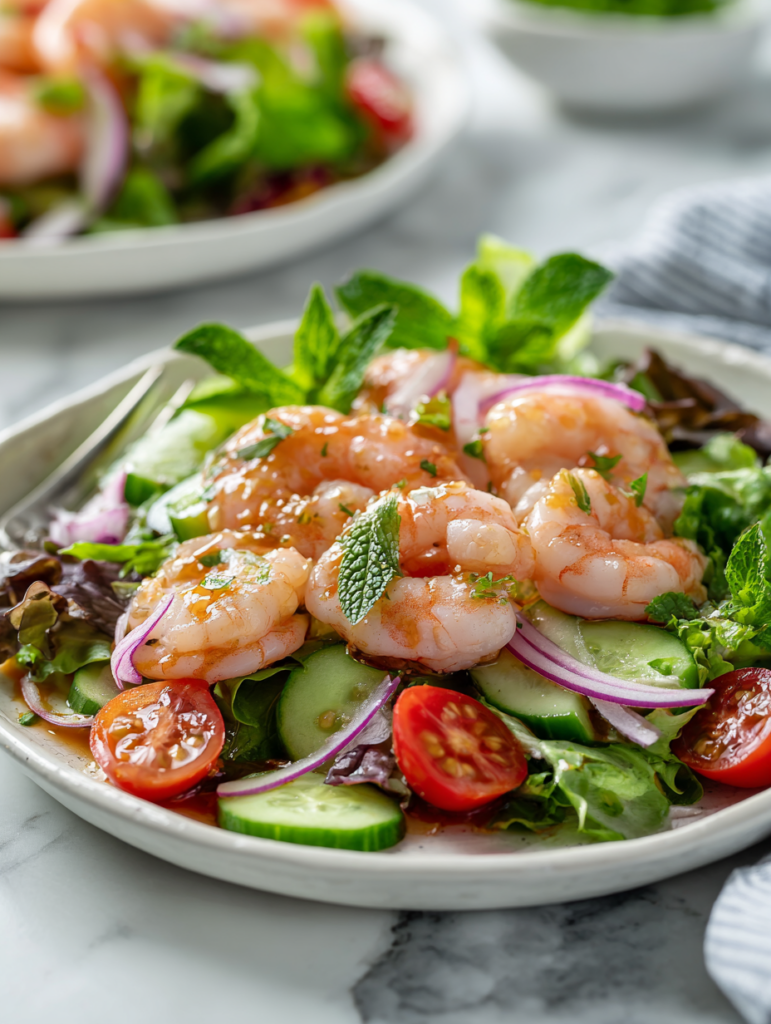
In my kitchen, shrimp salad is more than just a quick lunch; it’s a balance act I’ve refined over years. Getting the shrimp tender and juicy without overcooking is a constant challenge, but when it works, it’s a revelation. I focus on keeping everything crisp and fresh, almost like a dance between heat and coolness, to make each bite pop with brightness.
This recipe is my ode to that delicate balance. It’s about getting the shrimp just right—firm, not rubbery—while tossing in crunchy vegetables and a tangy dressing that cuts through the richness. It’s a dish that feels like a fresh breeze on a warm day, but it’s also a reminder that simple ingredients, treated right, can turn into something memorable.
Focusing on the overlooked importance of balancing heat and freshness in shrimp salads, this recipe emphasizes how to achieve perfectly tender shrimp while maintaining vibrant, crisp vegetables to elevate a simple dish into a memorable, flavor-packed experience.
The story behind this recipe
- This shrimp salad idea bloomed from a chaotic summer picnic where I overcooked shrimp and nearly lost my mind. Instead of tossing everything and starting over, I decided to embrace the slightly chewy, smoky notes and build around that. It became my go-to for those hot days when I want something quick, satisfying, and full of personality.
- Every time I make this, I remember the messy, laughter-filled afternoons with friends, sharing plates and stories over a simple, imperfect dish. It’s a reminder that sometimes, the best recipes come from a little chaos and a lot of flexibility.
- It’s a dish that’s as much about the imperfect moments as the perfect bites—an honest, lively celebration of summer flavors and good company.
Ingredient breakdown
- Shrimp: I like mine peeled and deveined, then poached just until they turn pink and firm—about 2-3 minutes. Softer shrimp can lose their texture, so don’t overdo it.
- Lemon juice: Freshly squeezed brightens everything with a zing that cuts through the richness. Skip bottled juice if you want that vibrant, citrus punch.
- Olive oil: Use good-quality extra virgin for a fruity, grassy note. If you prefer a milder taste, a neutral oil like avocado works fine, but it won’t have the same depth.
- Vegetables: Crunchy cucumbers and sweet bell peppers add refreshing contrast. Slice them thin—bite-sized—so they mingle well without overpowering the shrimp.
- Herbs: Chopped parsley or cilantro gives a fresh, herbal lift. I recommend adding just before serving; wilted herbs lose their punch if dressed too early.
- Dressing: A simple mix of mayonnaise, lemon, and a dash of Dijon brings creaminess and tang. If you want a lighter version, swap mayo for Greek yogurt, but be prepared for a slightly tangier flavor.
- Salt & pepper: Season gradually, tasting as you go. The right pinch enhances all the other flavors without dulling the delicate shrimp or vegetables.
Spotlight on key ingredients
Shrimp:
- I prefer mine peeled and deveined, poached just until they turn pink—about 2-3 minutes. Overcooked shrimp become rubbery and lose their delicate sweetness.
- They have a firm, slightly springy texture when perfectly cooked. Watch for a gentle curl and opaque flesh—that’s when they’re just right.
Lemon juice:
- Freshly squeezed brightens the salad with a crisp, tart punch that cuts through the richness of the dressing and enhances the seafood’s natural sweetness.
- It reacts quickly with the dressing ingredients, adding a zesty aroma and a clean, refreshing finish that lifts every bite.
Notes for ingredient swaps
- Dairy-Free: Swap mayonnaise for mashed avocado or tahini—creamy but richer in flavor, less tangy.
- Low-Sodium: Use reduced-sodium soy sauce or omit added salt; flavors will be milder but still fresh.
- Herbs: Fresh basil or dill can replace parsley or cilantro—each adds a different aromatic note.
- Vegetables: Radishes or snap peas add crunch and sharpness—try them if you want more variety and color.
- Citrus: Lime juice or vinegar can substitute lemon—each brings a distinct brightness, so choose based on your mood.
- Protein: Scallops or cooked lobster chunks make fine alternatives—just adjust cooking times and flavors accordingly.
- Oil: Light sesame oil offers a nutty aroma, while neutral oils like canola keep it simple and subtle.
Equipment & Tools
- Large pot: Boil the shrimp quickly and evenly.
- Slotted spoon: Remove shrimp from boiling water without excess water.
- Mixing bowl: Combine and toss all ingredients smoothly.
- Sharp knife: Thinly slice vegetables for balanced bites.
- Small whisk or fork: Whisk the dressing ingredients together.
Step-by-step guide to shrimp salad
- Gather your equipment: a large pot for boiling water, a slotted spoon, a mixing bowl, a sharp knife, and a small whisk or fork for dressing. Set aside.
- Bring a pot of salted water to a gentle boil, about 4 liters (1 gallon) with 1 tablespoon salt, heated to 100°C (212°F).
- Add the shrimp: 450 grams (1 pound) peeled and deveined. Cook for exactly 2-3 minutes, until they turn pink and start to curl. Watch for a slight translucency fading to opaque.
- Remove shrimp with a slotted spoon, and plunge into an ice bath immediately to halt cooking and keep them firm. Chill for 5 minutes.
- While shrimp cools, prepare the vegetables: thinly slice 1 cucumber, 1 red bell pepper, and 2 green onions. Keep everything crisp and bite-sized.
- Make the dressing: in a small bowl, whisk together 3 tablespoons mayonnaise, 1 tablespoon lemon juice, 1 teaspoon Dijon mustard, a pinch of salt, and freshly ground pepper to taste.
- Drain the shrimp and pat dry gently. Toss them with the chopped vegetables and dressing in a large bowl. Mix gently to coat everything evenly.
- Taste and adjust seasoning: add more lemon juice or salt if needed. The dressing should be tangy and slightly creamy, clinging well to the ingredients.
- Rest the salad for 10 minutes at room temperature. This lets flavors meld and the vegetables soften just a bit, without losing their crunch.
- Serve in bowls or on plates, garnished with extra herbs if you like. It’s best enjoyed fresh, but can be stored in the fridge for up to 2 hours.
Let the salad rest for 10 minutes at room temperature. Serve immediately for the best crunch and freshness. Garnish with herbs if desired.
How to Know It’s Done
- Shrimp are opaque and firm, not translucent or rubbery.
- Vegetables remain crisp and vibrant, not wilted or soggy.
- Dressing is tangy, creamy, and coats ingredients without pooling.
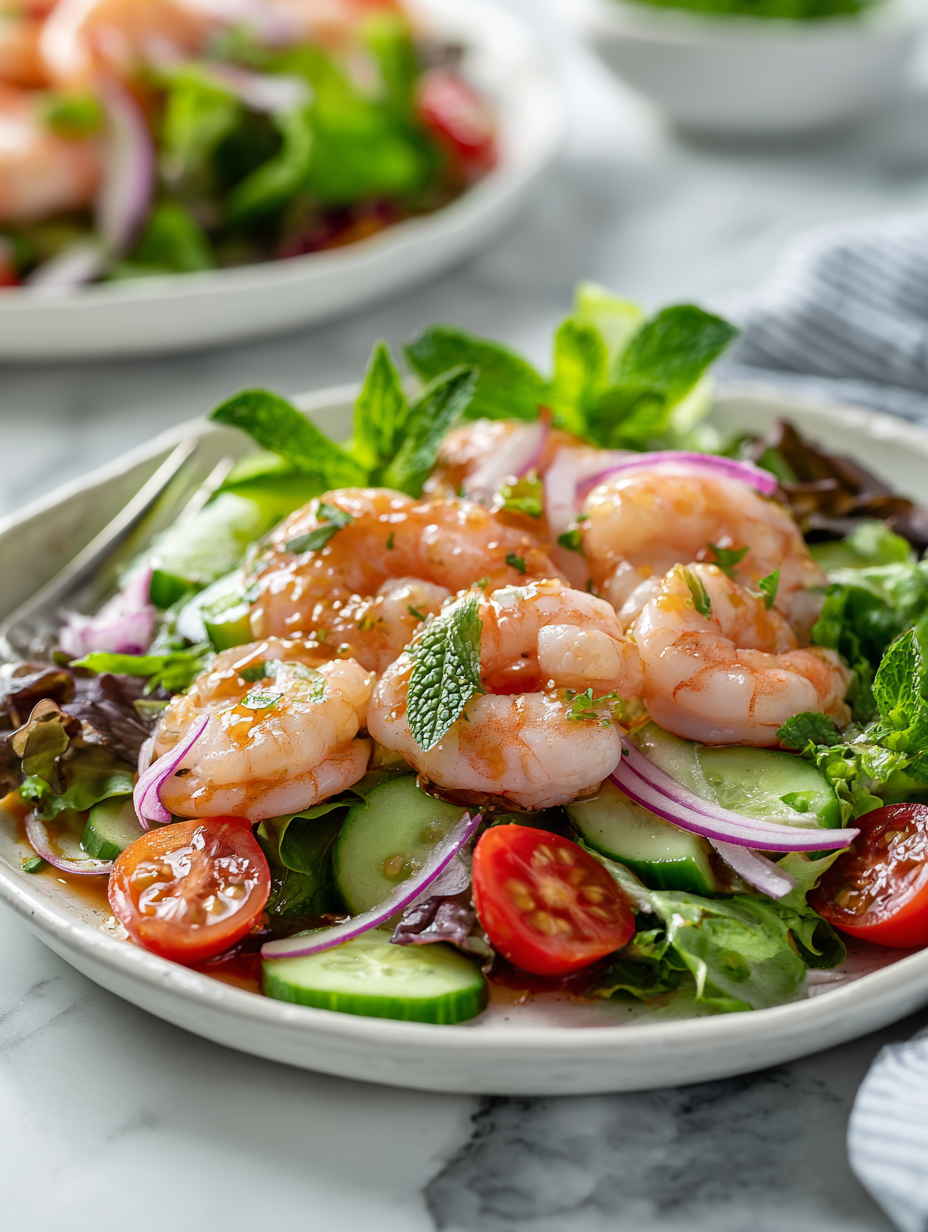
Shrimp Salad
Ingredients
Equipment
Method
- Bring a large pot of salted water to a gentle boil, about 4 liters with 1 tablespoon salt, heated to 100°C (212°F).
- Add the peeled and deveined shrimp to the boiling water and cook for exactly 2-3 minutes, until they turn bright pink and curl slightly. You’ll notice the flesh becoming opaque and firm.
- Remove the shrimp with a slotted spoon and immediately transfer them into an ice bath to stop the cooking process and keep them tender and juicy. Let them chill for about 5 minutes.
- While the shrimp cools, thinly slice the cucumber, red bell pepper, and green onions. Keep everything bite-sized and crisp for a fresh texture.
- In a small bowl, whisk together the mayonnaise, freshly squeezed lemon juice, Dijon mustard, a pinch of salt, and freshly ground pepper until smooth and creamy.
- Drain the chilled shrimp and gently pat them dry with paper towels to remove excess moisture. Toss the shrimp with the prepared vegetables in a large mixing bowl.
- Pour the creamy dressing over the shrimp and vegetables, then gently fold everything together, ensuring an even coating without breaking the shrimp apart.
- Taste the salad and adjust seasoning with more lemon juice, salt, or pepper if needed. The dressing should be tangy and vibrant, complementing the fresh ingredients.
- Transfer the salad to a serving dish and sprinkle with chopped parsley or cilantro for a fresh herbal finish. Let it rest for 10 minutes at room temperature to meld the flavors.
- Serve the shrimp salad chilled or at room temperature, garnished with extra herbs if desired. Enjoy the bright, crisp textures and lively flavors in every bite!
Tips and tricks for perfect shrimp salad
- Use fresh shrimp for a briny, sweet flavor that’s unmistakable. Frozen can work, but fresh is better.
- Chill your ingredients thoroughly before mixing; cold veggies and shrimp keep the salad crisp and fresh.
- Toss the shrimp in a little lemon juice immediately after cooking to keep them tender and add brightness.
- When making the dressing, taste and adjust the acidity last—sometimes a squeeze more lemon makes all the difference.
- Gently fold the ingredients together—avoid vigorous stirring to keep the shrimp tender and vegetables crisp.
- If the salad feels a little heavy, add a splash of extra lemon or vinegar right before serving to brighten it up.
- For an extra smoky flavor, briefly char the shrimp over high heat after boiling—watch carefully, it’s quick!
Common mistakes and how to fix them
- FORGOT to check shrimp doneness → Overcooked shrimp become rubbery, so test for opaque, firm flesh.
- DUMPED dressing too early → Wait until just before serving to keep vegetables crisp and dressing fresh.
- OVER-TORCHED vegetables → Slice thin for even, quick crunch; avoid overmixing to prevent sogginess.
- MISSED seasoning balance → Taste and adjust salt, lemon, and herbs at the end for bright, well-rounded flavor.
Quick fixes and pantry swaps
- When overcooked shrimp turn rubbery, splash them with cold water to halt cooking immediately.
- If dressing seems too thick, whisk in a splash of lemon juice or water to loosen it.
- Splash a little extra lemon or vinegar when salad feels dull, for an instant flavor boost.
- Patch soggy vegetables by adding a squeeze of fresh lemon before serving for crispness.
- Shield delicate shrimp from overcooking by removing from heat as soon as they turn pink, then chill quickly.
Prep, store, and reheat tips
- Prepare the shrimp: peel, devein, and cook up to 1 day in advance. Keep chilled in an airtight container; shrimp stay firm and juicy for about 24 hours.
- Chop vegetables: slice cucumbers, peppers, and herbs a few hours before serving. Store in a sealed container in the fridge to maintain crunch and freshness.
- Make the dressing: whisk together the mayonnaise, lemon juice, and seasonings. Cover tightly and refrigerate for up to 2 days; it will develop a tangier note over time.
- Assemble closer to serving: toss cooled shrimp with vegetables and dressing just before plating. The salad’s crunch and brightness are best kept fresh, so don’t dress too early.
- Refrigerate leftovers: store in an airtight container for up to 24 hours. The shrimp may lose some firmness, and the vegetables might soften slightly, but flavors will meld nicely.
Top questions about shrimp salad
1. How do I prevent shrimp from overcooking?
Use fresh, peeled, and deveined shrimp for the best flavor and texture. Overcooked shrimp turn rubbery quickly, so keep an eye on them.
2. Why does my shrimp feel rubbery?
Chill your cooked shrimp immediately after boiling to keep them firm and juicy. Ice bath halts cooking and preserves texture.
3. Can I make this salad in advance?
Make the salad ahead by preparing all ingredients and storing separately. Toss everything together just before serving to keep it crisp.
4. Can I substitute the oil in the dressing?
Use a mild-flavored oil like avocado or a neutral oil if you prefer less pronounced olive oil taste. It won’t affect the dressing’s brightness much.
5. Can I make the dressing healthier?
Yes, Greek yogurt is a good swap for mayo for a lighter, tangier dressing. It pairs well with lemon and herbs.
6. How do I balance the dressing’s acidity?
Adjust the acidity by adding more lemon juice or vinegar; taste as you go. The bright punch makes the salad lively.
7. How should I prepare the vegetables?
Slice vegetables thinly for even mixing and crunchy texture. Keep them bite-sized so they don’t overpower the shrimp.
8. When should I add the herbs?
Garnish with fresh herbs just before serving to keep their aroma bright and fresh. Wilted herbs lose their punch quickly.
9. How do I season the salad properly?
Taste and season gradually, adding more salt, lemon, or herbs last to perfect the flavor balance.
10. How should I serve and store this salad?
Serve the salad immediately for the crunchiest texture. If refrigerating, bring to room temperature before serving to restore freshness.
This shrimp salad feels like a fresh breeze, especially when you catch that perfect balance of tender seafood and crisp vegetables. It’s one of those dishes that reminds you how simple ingredients, treated right, can make a real impact. Perfect for warm days or when you want something satisfying but not heavy.
Whenever I make this, I’m reminded that good cooking is about paying attention to those small, honest moments—like how the shrimp smell just a little sweet when perfectly cooked or how the lemon brightens everything. It’s a dish I keep coming back to, especially when I need something reliable and full of honest flavor.
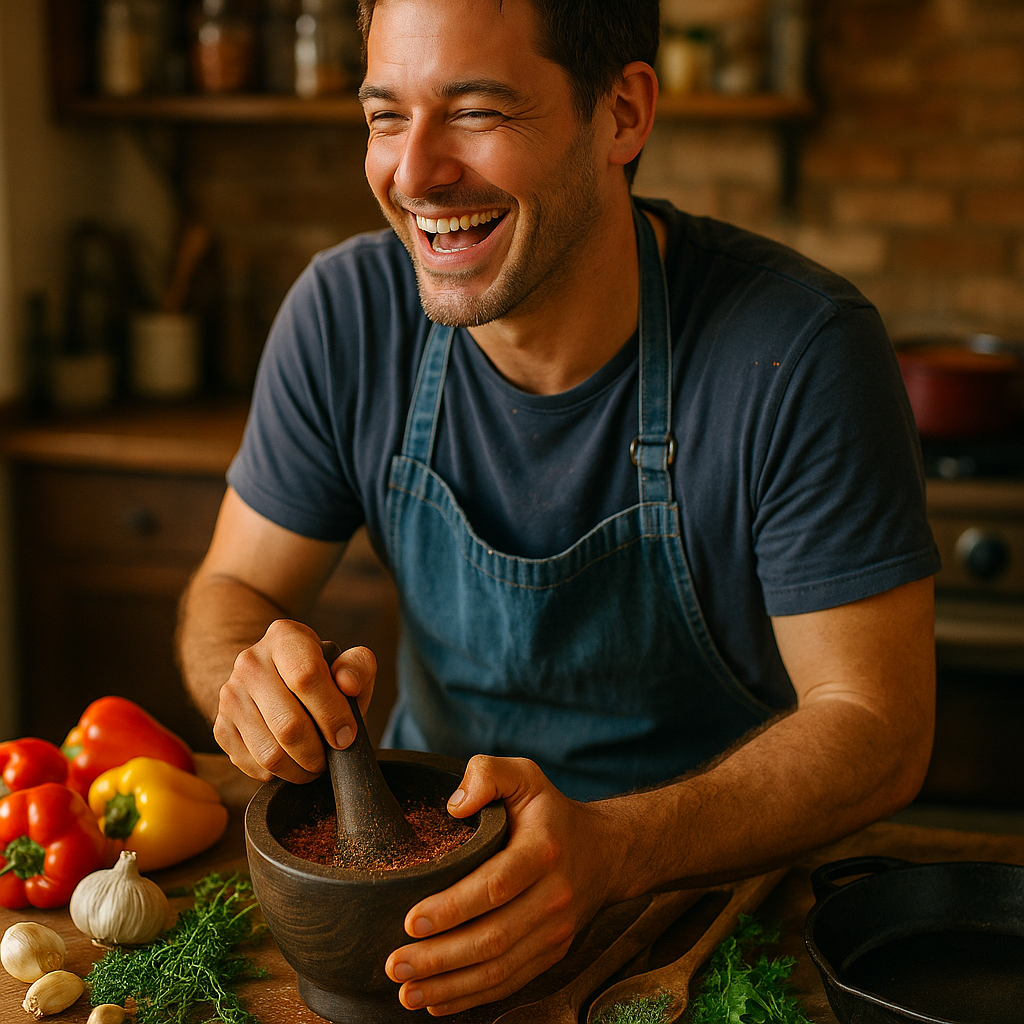
Hi, I’m Theo Granger, a former line cook and unapologetic flavor maximalist from New Orleans. I believe there are two types of people in this world: those who season their food, and those who LIVE to season their food. This blog is for the latter.