
This dish started as a way to marry two simple pleasures: crispy, indulgent pork belly and the bright, tangy sweetness of homemade apple puree. There’s something about the contrast—crunch and silk, savory and sweet—that keeps me coming back to it, especially on chilly evenings when comfort feels just right.
Cooking pork belly can feel intimidating, but I’ve found that when you slow roast it until the skin crackles and fat renders out, it transforms into something almost magical. Pairing it with apple puree takes a bit of finesse—balancing the richness with a touch of tartness, so neither overpowers the other. It’s a straightforward recipe, but it’s all about the feel and taste, not perfection in every step.
Focusing on the contrasting textures and flavors of crispy pork belly and silky apple puree, I see this dish as a celebration of simple ingredients elevated through technique and balance, perfect for a cozy fall evening.
Balancing Richness and Brightness
- I love how the crispy pork belly crackles louder with each bite, revealing its rich, fatty layers beneath.
- There’s a nostalgic joy in making apple puree from scratch, feeling the tartness cut through the pork’s richness.
- Sometimes, I get impatient waiting for the skin to crisp completely—it’s a messy, rewarding process.
- The smell of slow-roasting pork with hints of garlic and thyme fills the house, making everyone gather around.
- A splash of vinegar in the apple puree adds a surprising brightness that lifts the dish in a way I didn’t expect.
The story behind this recipe
- This dish came together during a chilly weekend when I was craving something hearty but with a touch of freshness. I remembered how my grandmother used to roast pork belly slowly, filling the house with a rich, caramelized aroma that lingered long after the meal was over. The idea of pairing that crispy, fatty pork with bright, homemade apple puree came from wanting to balance indulgence with a hint of tartness and lightness.
- I started experimenting with different cuts and cooking times, but what stuck was the contrast—the crackle of crispy skin and the silky smoothness of the apple puree. It’s a simple concept, but the harmony of textures and flavors feels like a little victory each time I get it right.
- heading: ‘The story behind this recipe’
Historical & Cultural Notes
- Pork belly has been a staple in Chinese and Filipino cuisines for centuries, often slow-cooked or roasted to bring out its rich layers.
- Apple puree dates back to medieval Europe, where it was prized for its sweet-tart flavor and used in both desserts and sauces.
- The combination of pork and apples became popular in rural European kitchens, symbolizing hearty, comforting meals that balanced fat and acidity.
Ingredient breakdown: key components
- Pork belly: I love how the fat slowly renders, creating that irresistible crackle and melt-in-your-mouth richness—skip the skin if you want a leaner version.
- Apples: I prefer tart varieties like Granny Smith for their bright contrast; their natural pectin helps thicken the puree without added starch.
- Garlic: A couple of cloves, smashed and roasted with the pork, infuse a mellow, smoky undertone—don’t skimp on that slow cook.
- Salt: Essential for both seasoning and encouraging skin crispness—sea salt works best, but kosher is forgiving if you need more surface surface coverage.
- Vinegar (apple cider or white): A splash in the puree brightens everything up, making the sweetness pop—just a teaspoon is enough to lift the flavor.
- Herbs (thyme or rosemary): Fresh sprigs tucked under the pork skin add aromatic depth—if you don’t have fresh, dried works but less fragrant.
- Oil (neutral like vegetable or canola): Helps crisp the skin and keeps the meat moist—don’t use too much, just enough to coat the surface lightly.
Spotlight on key ingredients
Pork belly:
- I love how the fat slowly renders, creating that irresistible crackle and melt-in-your-mouth richness—skip the skin if you want a leaner version.
- Apples: I prefer tart varieties like Granny Smith for their bright contrast; their natural pectin helps thicken the puree without added starch.
- Garlic: A couple of cloves, smashed and roasted with the pork, infuse a mellow, smoky undertone—don’t skimp on that slow cook.
Apple:
- Apples: Their tartness is what makes the dish sing—look for firm, shiny fruit, and don’t skimp on peeling or cooking them down.
- Vinegar: A splash of apple cider vinegar brightens the puree, sharpening the sweetness—use it generously in your tasting.
- Herbs: Fresh thyme or rosemary add aromatic complexity—tuck sprigs under the pork skin to infuse during roasting.
Notes for ingredient swaps
- Dairy-Free: Use coconut cream or almond butter in the puree. The texture will be a bit lighter and slightly nuttier.
- Sweetness Swap: Pears or quinces can replace apples for a different fruity note—think softer, more floral flavors.
- Salt Alternative: Sea salt can be swapped for kosher salt, but adjust the quantity slightly to match saltiness.
- Herb Variations: Fresh sage or oregano can add aromatic depth—dried herbs work but lose some brightness.
- Vinegar Substitute: Lemon juice or white wine vinegar can brighten the puree if you don’t have apple cider vinegar—start with less and taste.
- Fat Reduction: For a leaner version, use skinless pork shoulder, but expect less crackle and richness.
- Oil Choices: Swap neutral oil for duck fat or bacon fat for extra flavor—be prepared for a more pronounced, smoky aroma.
Equipment & Tools
- Ovenproof skillet: To sear and roast the pork belly in one vessel, capturing juices.
- Sharp knife: To score the pork skin without cutting into the meat.
- Small saucepan: To cook and mash the apple puree.
- Wooden spoon or masher: To mash the cooked apples smoothly.
Step-by-step guide to pork belly with apple puree
- Preheat your oven to 160°C (320°F). Pat the pork belly dry with paper towels—moisture is the enemy of crisp skin.
- Score the skin in a crosshatch pattern, being careful not to cut into the meat. Rub generously with sea salt—this helps draw out moisture and crackle the skin.
- In a hot, ovenproof skillet (preferably cast iron), place the pork belly skin-side down over medium-high heat. Render the fat for 5-7 minutes until the skin starts to crackle and turn golden.
- Flip the pork belly, sear the meat side for 2-3 minutes until browned. Add a few smashed garlic cloves and sprigs of thyme or rosemary around the meat for aroma.
- Transfer the skillet to the oven and roast for 2 hours, uncovered. The fat will slowly render, and the skin will crisp up—check after 1 hour, baste with pan juices if needed.
- Meanwhile, peel and core the apples. Chop into small chunks. In a saucepan over medium heat, melt a teaspoon of butter, add apples, and cook until soft—about 15 minutes.
- Add a splash of apple cider vinegar and a pinch of salt to the apples. Mash with a fork or blend for a smoother puree—taste and adjust acidity as needed.
- Once the pork is cooked, remove from oven and let rest for 10 minutes. Resting allows juices to redistribute, ensuring moist meat.
- Slice the pork belly into thick pieces. Plate with a generous spoonful of apple puree on the side. Drizzle with any reserved pan juices for extra flavor.
Let the pork rest uncovered for 10 minutes, then slice. Serve pork with a dollop of apple puree, garnished with herbs if desired. Finish with a drizzle of pan juices for added flavor.
How to Know It’s Done
- Pork skin: golden, crackling, crispy when pressed.
- Internal temp: 70°C (160°F) in thickest part, for safe, juicy pork.
- Apple puree: smooth, bright, with a subtle tartness, not watery.
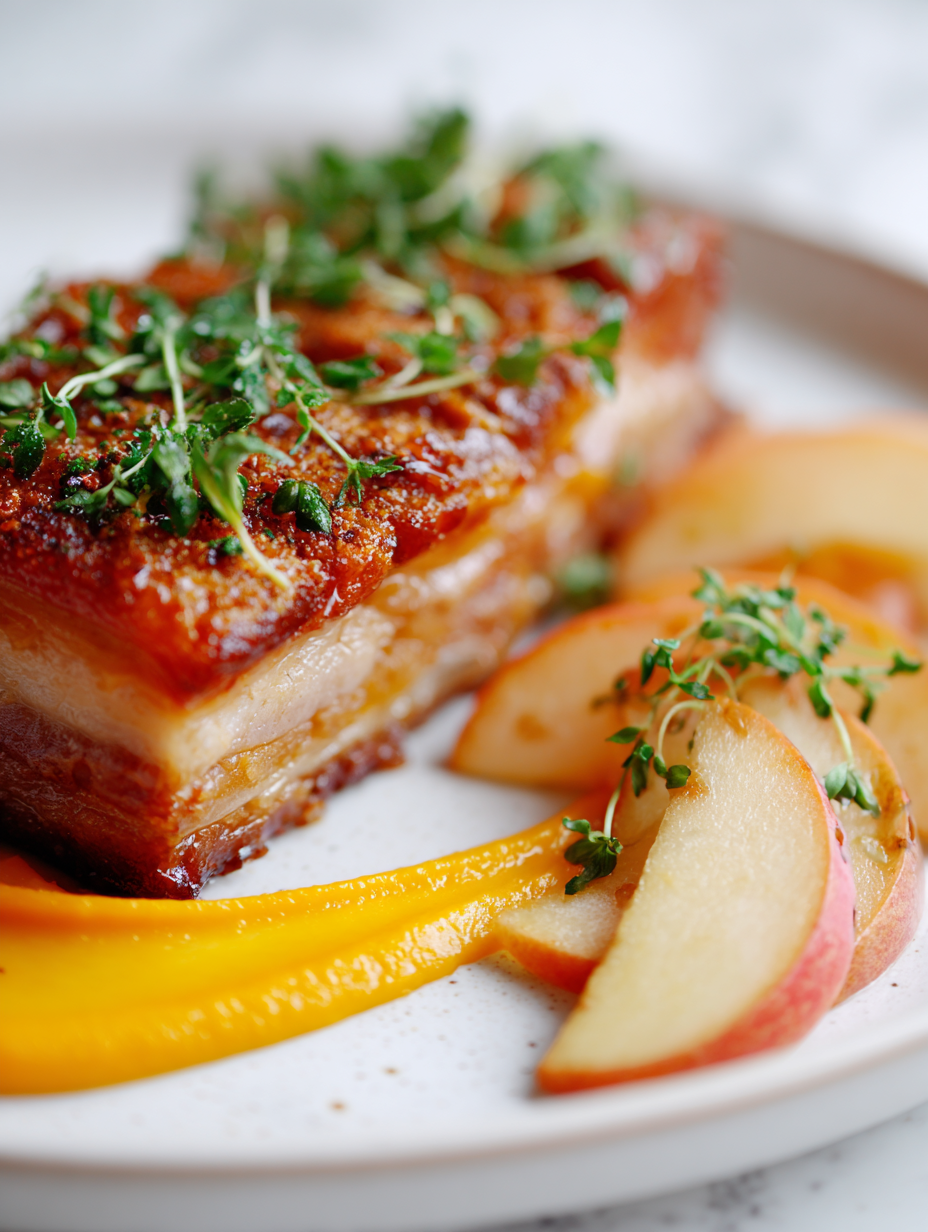
Crispy Pork Belly with Homemade Apple Puree
Ingredients
Equipment
Method
- Preheat your oven to 160°C (320°F). Pat the pork belly dry with paper towels to remove moisture, which helps achieve crisp skin later.
- Use a sharp knife to score the pork skin in a crosshatch pattern, being careful not to cut into the meat underneath. Rub the skin generously with sea salt; this draws out moisture and promotes crackling.
- Heat an ovenproof skillet over medium-high heat with a teaspoon of neutral oil. Place the pork belly skin-side down and sear for 5-7 minutes, listening for the crackling sound and watching the skin turn golden and crispy.
- Flip the pork belly to sear the meat side for 2-3 minutes until browned. Tuck smashed garlic cloves and herb sprigs around the meat to infuse flavor during roasting.
- Transfer the skillet to the oven and roast uncovered for about 2 hours. The fat will slowly render out, and the skin will become crackly. Check after 1 hour and baste with pan juices if needed for even crisping.
- Meanwhile, peel, core, and chop the apples into small chunks. In a small saucepan, melt a teaspoon of butter over medium heat, then add the apples and cook gently for about 15 minutes until soft and fragrant.
- Add a teaspoon of apple cider vinegar and a pinch of salt to the cooked apples. Mash with a wooden spoon or use a masher until smooth, adjusting for consistency—add a splash of water if too thick.
- Once the pork has roasted for 2 hours and the skin is golden and crackling, remove it from the oven and let it rest for 10 minutes. Resting helps retain juices and makes slicing easier.
- Slice the pork belly into thick, crispy pieces. Plate the slices alongside a generous spoonful of the smooth apple puree, drizzled with any pan juices for extra flavor.
- Enjoy your crispy pork belly with bright, silky apple puree—perfect for a cozy, flavorful meal.
Tips & Tricks for Perfect Pork Belly
- Crisp Skin: Ensure the skin is completely dry before scoring and salting for maximum crackle.
- Rendering Fat: Sear the pork belly skin-side down over medium-high heat until crackling begins—listen for the crackle sound.
- Apple Puree: Cook apples slowly over medium heat until soft and fragrant, avoiding high heat that can burn or caramelize too quickly.
- Seasoning: Salt the pork generously and evenly for better skin crispness and flavor penetration.
- Resting: Rest the sliced pork for at least 10 minutes to allow juices to redistribute, keeping it moist and tender.
- Oven Roasting: Roast uncovered at 160°C (320°F) for even fat rendering and skin crisping, checking after 1 hour to baste if needed.
- Flavor Balance: Add a splash of vinegar to the apple puree for a bright, tangy contrast that cuts through the richness.
Common mistakes and how to fix them
- FORGOT to check pork skin early? Crank up the heat to 220°C (430°F); it crisps faster.
- DUMPED the apple puree too thick? Thin with a splash of water or cider, then stir gently.
- OVER-TORCHED the pork skin? Cover with foil and lower oven temperature to 150°C (300°F).
- MISSED resting time? Let the pork rest at least 10 minutes for juicier slices.
Quick fixes and pantry swaps
- When skin isn’t crackling, splash with hot oil and crank oven to 220°C (430°F).
- If apple puree is too thick, add a splash of water or cider and stir gently.
- Over-torched pork skin? Drape foil over and lower oven to 150°C (300°F).
- Forgot to rest? Let the pork sit uncovered for 10 minutes for juicier slices.
- Splash a bit of vinegar into the apple puree for extra brightness and balance.
Prep, store, and reheat tips
- You can prepare the apple puree a day ahead; store in an airtight container in the fridge for up to 2 days. It will taste brighter and fresher when served soon after reheating, with a smooth, slightly tart flavor.
- Pork belly can be cooked and refrigerated overnight; reheat gently in the oven at 150°C (300°F) until warmed through, keeping the skin crispy and meat moist. Expect the crackle to soften slightly but still be delightful.
- Leftover pork slices will keep in the fridge for 2-3 days. Reheat in a skillet over medium heat, uncovered, until the edges crisp again and the internal temperature reaches 70°C (160°F).
- To reheat the apple puree, warm it slowly in a small pot over low heat, stirring frequently. It will become more fragrant and slightly more concentrated—add a splash of water or cider if it thickens too much.
- For longer storage, freeze cooked pork belly in airtight containers for up to 1 month. Thaw overnight in the fridge and reheat slowly as described. The texture may soften slightly, but the flavors will hold.
Top questions about Pork Belly with Apple Puree
1. Can I substitute pork shoulder for pork belly?
Yes, you can use pork shoulder, but it won’t be as crispy. It will be more tender and less crackly.
2. Should I peel the apples for the puree?
Peeling the apples is optional but helps create a smoother puree. Choose tart apples like Granny Smith for brightness.
3. How long should I cook the pork belly?
Cooking at 160°C (320°F) for about 2 hours allows the fat to render and the skin to crisp up nicely.
4. My pork skin isn’t crackling, what should I do?
If the pork skin isn’t crackling, increase oven temperature and ensure the skin is dry and scored properly.
5. Can I add vinegar to the apple puree?
Yes, adding a splash of vinegar in the apple puree enhances its brightness and balances the sweetness.
6. How should I store and reheat leftovers?
Refrigerate cooked pork belly overnight; reheat gently in the oven for best texture and flavor.
7. What type of apples work best for the puree?
Using tart apples like Granny Smith gives a vibrant contrast. For sweetness, add a touch of honey or sugar if desired.
8. Why is resting the pork important?
Rest the pork for at least 10 minutes after roasting to let juices redistribute, ensuring moist slices.
9. The skin is burning, what should I do?
To prevent over-torched skin, cover with foil and lower the oven temperature if it starts to burn.
10. How do I season the apple puree properly?
Adjust the seasoning by tasting the apple puree before serving. Add more vinegar or salt to balance flavors.
This dish feels like a small celebration of contrasts—crisp, fatty pork paired with tangy, smooth apple puree. It’s perfect for those chilly evenings when you want something that feels both indulgent and balanced. Plus, it’s a bit of a nod to rustic traditions, elevated through simple techniques.
Whenever I make this, I’m reminded that even straightforward ingredients can create something memorable. It’s not about perfection but about capturing those moments of crispy crunch and bright sweetness, right when everything comes together just right.

Hi, I’m Theo Granger, the voice and recipe creator behind Boldly Overseasoning.
If you believe salt is not the enemy, spices should be generous, and flavor should never whisper when it can sing, then you are absolutely in the right place. Boldly Overseasoning is my unapologetic celebration of big flavor, confident cooking, and trusting your instincts in the kitchen. I created this space for people who are done with bland food and ready to cook with courage.



Leave a Reply