
Mushroom risotto is one of those dishes that feels humble but hides a quiet complexity. It’s not about fancy ingredients, but about coaxing maximum flavor from earthy mushrooms and creamy rice. I’ve always loved how a splash of white wine and a gentle stir can transform a simple pot into something deeply satisfying.
What draws me to this dish is its balance — the umami punch of mushrooms paired with the brightness of a touch of acidity. It’s a slow dance of patience and attention, but each bite rewards that effort with a velvety texture and a savory punch that lingers. Making mushroom risotto is a bit of a ritual, a reminder that good things often come from gentle, deliberate care.
Focusing on the overlooked art of balancing earthy mushroom flavors with a touch of acidity from a splash of white wine, this risotto becomes a canvas for highlighting the mushrooms’ umami and texture, making each bite a small, savory revelation.
The understated joy of earthy richness
- There’s something about the earthy aroma of mushrooms that always pulls me in, even on the busiest days.
- Cooking this risotto reminds me of lazy Sunday afternoons filled with the smell of garlic and toasted rice.
- Achieving the perfect creamy texture feels like a small victory, especially when I get that slight bite from the rice.
- Sharing a steaming bowl of mushroom risotto feels like reconnecting with simple, honest flavors we forget in modern cooking.
The story behind this recipe
- This mushroom risotto came about during a rainy weekend when all I wanted was something earthy and comforting. I had a handful of wild mushrooms in the fridge, leftover from a foraging trip, and a craving for something that felt grounding but not heavy. Stirring that creamy rice while releasing the savory aroma of mushrooms felt like a small act of mindfulness, a slow kind of therapy.
- I remember the first time I made it for friends. We sat around the table, bowls steaming, and the simple, honest flavors sparked a whole evening of stories and laughter. Since then, it’s become my go-to dish whenever I need a reminder that good food doesn’t need to be complicated. It’s about embracing patience, the faint sizzle of mushrooms, and the gentle whisper of simmering broth.
- heading: The quiet joy of earthy richness
Historical and Cultural Trivia
- Mushroom risotto has roots in Northern Italy, where rice paddies and foraged wild mushrooms create a natural pairing.
- Historically, risotto was a humble dish, born out of peasant kitchens using available ingredients like wild mushrooms and simple rice.
- The technique of slowly cooking rice with broth to achieve creaminess was perfected in the Lombardy region over centuries.
- Wild mushrooms used in traditional risotto often included porcini and chanterelles, prized for their deep umami flavor.
- In Italy, mushroom risotto is often served during autumn, celebrating the mushroom harvest season with local pride.
Ingredient breakdown
- Wild mushrooms: I love the earthy aroma of a mix of wild mushrooms; if you can’t find them, a good cremini or shiitake works, but the wild ones really bring a smoky, umami punch.
- Arborio rice: The starchy core of this dish; skip a quality risotto rice, and you’ll lose that creamy, velvety texture—look for the plump, short-grain kind.
- White wine: Adds a bright, slightly tart layer; use a dry unoaked variety, and if you skip it, the risotto might feel a bit dull and heavy.
- Vegetable broth: I simmer my own for depth, but a good store-bought works too; make sure it’s warm before adding so the rice cooks evenly and stays tender.
- Parmesan: The salty, nutty finish; grate it fresh for the best flavor, and if you’re dairy-free, a splash of nutritional yeast can add a similar savory note.
- Garlic & shallots: They build the base flavor; don’t skimp—sauté until fragrant and slightly caramelized for that rich, sweet depth.
- Butter & olive oil: I use a combo for richness and balance; if you prefer vegan, a splash of good olive oil works, but the butter really helps with that silky finish.
Spotlight on key ingredients
Wild Mushrooms:
- I love the earthy aroma of a mix of wild mushrooms; if you can’t find them, a good cremini or shiitake works, but the wild ones really bring a smoky, umami punch.
- They release a deep, savory aroma as they cook, becoming tender and slightly chewy—perfect for adding complexity to the risotto.
- During sautéing, they develop a slightly crispy edge, offering a satisfying texture contrast in each bite.
Arborio Rice:
- The starchy core of this dish; skip a quality risotto rice, and you’ll lose that creamy, velvety texture—look for the plump, short-grain kind.
- It absorbs flavors beautifully, swelling up while maintaining a slight bite; avoid long-grain varieties that won’t give you that creaminess.
- When properly cooked, it should be tender yet firm in the center, with a glossy, slightly pearly appearance.
Notes for ingredient swaps
- Wild Mushrooms: I love the earthy aroma of a mix of wild mushrooms; if you can’t find them, a good cremini or shiitake works, but the wild ones really bring a smoky, umami punch.
- Arborio Rice: The starchy core of this dish; skip a quality risotto rice, and you’ll lose that creamy, velvety texture—look for the plump, short-grain kind.
- White Wine: Adds a bright, slightly tart layer; use a dry unoaked variety, and if you skip it, the risotto might feel a bit dull and heavy.
- Vegetable Broth: I simmer my own for depth, but a good store-bought works too; make sure it’s warm before adding so the rice cooks evenly and stays tender.
- Parmesan: The salty, nutty finish; grate it fresh for the best flavor, and if you’re dairy-free, a splash of nutritional yeast can add a similar savory note.
- Garlic & Shallots: They build the base flavor; don’t skimp—sauté until fragrant and slightly caramelized for that rich, sweet depth.
- Butter & Olive Oil: I use a combo for richness and balance; if you prefer vegan, a splash of good olive oil works, but the butter really helps with that silky finish.
Equipment & Tools
- Large, heavy-bottomed pan: For even heat and better control during cooking.
- Wooden spoon: Gentle stirring to release starch without breaking rice.
- Ladle: To add hot broth gradually and prevent cooling the pan.
- Saucepan: Warm broth for steady cooking.
Step-by-step guide to Mushroom Risotto
- Gather your equipment: a large, heavy-bottomed pan (preferably wide for even heat), a wooden spoon for stirring, and a ladle for adding broth.
- Prep your ingredients: chop shallots finely, clean and slice wild mushrooms if needed, and warm your broth in a separate pot.
- Heat the pan over medium heat (around 160°C/320°F). Add a tablespoon of butter and a splash of olive oil. When shimmering, add shallots. Cook until translucent, about 2-3 minutes, smelling sweet and slightly caramelized.
- Add mushrooms to the pan. Sauté until they release their earthy aroma, about 5 minutes. They should be tender and slightly browned. If they start to stick, add a splash of broth.
- Stir in the Arborio rice. Toast for 2 minutes, stirring constantly, until edges are translucent but centers are still opaque. The rice should smell nutty.
- Pour in ½ cup (120 ml) white wine. Stir until mostly evaporated, about 2 minutes. The wine adds brightness and depth.
- Begin adding hot broth, one ladle (about ½ cup), stirring constantly. Wait until the liquid is mostly absorbed before adding more. Keep the heat steady. Repeat this process, stirring gently, for about 20-25 minutes.
- Check the rice: it should be creamy, with a slight bite in the center, and the mixture should be thick but still pourable. If it’s too stiff, add a splash more broth; if too loose, let it simmer a bit longer.
- Taste and adjust salt. Turn off heat, stir in a handful of freshly grated Parmesan, and a knob of butter for extra richness. Cover loosely and let rest for 2 minutes.
- Plate the risotto immediately, garnishing with extra Parmesan and a sprinkle of fresh herbs if desired. Serve hot, with a drizzle of good olive oil if you like.
Rest the risotto for 2 minutes off the heat, then serve immediately, garnished as desired.
How to Know It’s Done
- Mushrooms are tender and fragrant after sautéing.
- Rice edges are translucent with a slight center opacity.
- The final mixture is creamy and slightly loose but not runny.
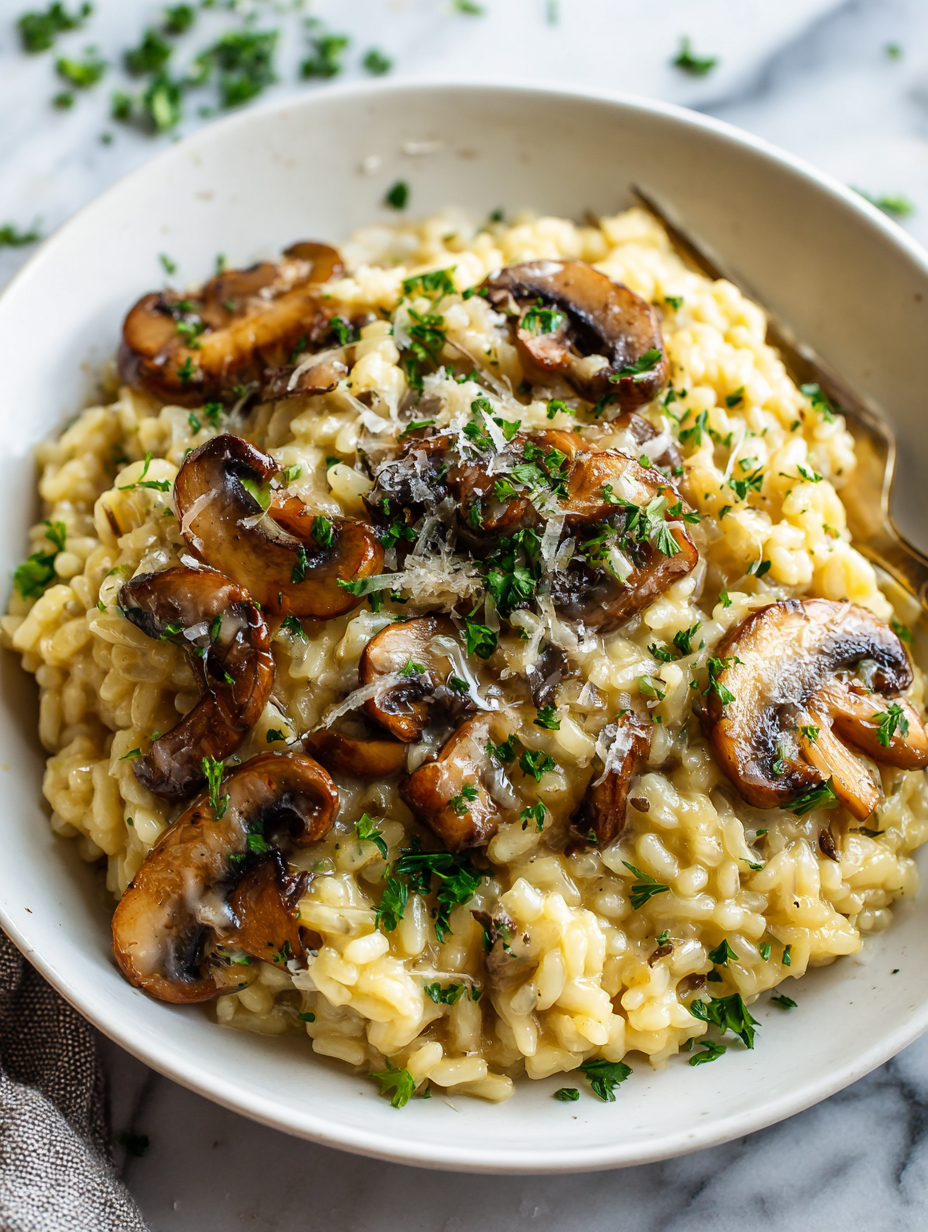
Mushroom Risotto
Ingredients
Equipment
Method
- Warm the vegetable broth in a saucepan over low heat so it’s ready to add gradually during cooking.
- Clean and slice the wild mushrooms, then set aside. Finely chop the shallot and mince the garlic.
- Place a large, heavy-bottomed pan over medium heat. Add butter and olive oil together and wait until shimmering and fragrant.
- Add the chopped shallots to the pan. Sauté until translucent and slightly caramelized, about 2-3 minutes, releasing a sweet aroma.
- Add the sliced mushrooms to the pan. Cook until they release their juices and become tender, about 5 minutes, stirring occasionally until browned and fragrant.
- Stir in the Arborio rice, coating each grain with the fat and toasting for about 2 minutes until the edges turn slightly translucent and smell nutty.
- Pour in the white wine and stir constantly until it is mostly absorbed, about 2 minutes, adding a bright, slightly tart aroma to the dish.
- Begin adding the warm broth one ladleful at a time, stirring gently. Wait until the liquid is mostly absorbed before adding the next ladle. Repeat this process, stirring continuously, for about 20-25 minutes, until the rice is tender yet still slightly firm in the center.
- As the risotto thickens and becomes creamy, taste and season with salt and pepper as needed.
- Remove the pan from heat and stir in the freshly grated Parmesan cheese for a savory, nutty finish. Let it rest, covered loosely, for 2 minutes to allow flavors to meld.
- Serve the risotto hot, garnished with extra Parmesan and a drizzle of olive oil if desired, enjoying its glossy, velvety texture and earthy aroma.
Notes
Pro tips for perfect mushroom risotto
- Use warm broth—adding cold liquid cools the rice and halts cooking.
- Stir continuously during broth addition—this releases starch and creates creaminess.
- Toast the rice briefly before adding wine—this enhances nutty aroma and flavor.
- Keep heat steady—medium to medium-low—to prevent rice from overcooking or sticking.
- Taste often—adjust salt and check texture to ensure perfect doneness.
- Finish with butter and cheese off heat—this prevents the risotto from becoming gluey.
- Let the risotto rest 2 minutes before serving—this allows flavors to meld and improves texture.
Common mistakes and how to fix them
- FORGOT to stir constantly → Stir gently but continuously to prevent sticking.
- DUMPED all broth at once → Add broth gradually for creamy, even cooking.
- OVER-TORCHED rice → Remove from heat once rice is tender and creamy.
- SKIPPED resting time → Let risotto sit for 2 minutes before serving for better texture.
Quick fixes and pantry swaps
- When mushrooms release too much water, splash a little more oil and sauté until crispy.
- If risotto is too thick, stir in a splash of warm broth to loosen it up.
- DUMPED all broth too quickly? Add it gradually, stirring constantly for creaminess.
- When rice is undercooked, cover and simmer for a few more minutes, then check again.
- Splash a touch of lemon juice if risotto feels too earthy or dull—brightens up the flavor.
Prep, store, and reheat tips
- Prepare your ingredients: chop shallots and slice mushrooms ahead. Store in airtight containers in the fridge for up to 24 hours. The aromas will be fresh and ready to release during cooking.
- Cook the risotto partially: you can cook the rice and mushrooms up to halfway, then cool quickly and refrigerate for up to one day. Finish with broth and cheese just before serving for best texture.
- Store leftovers in an airtight container in the fridge for up to 2 days. The rice may absorb more moisture, so reheat gently to prevent it from becoming too gluey.
- Reheat slowly: warm in a covered pan over low heat, stirring frequently. Add a splash of hot broth or water to restore creaminess. Expect the aroma to be mellow, with a slightly firmer texture and mellowed earthy flavor.
Top questions about Mushroom Risotto
1. Should I heat the broth before adding?
Use a warm, flavorful broth to keep the risotto cooking evenly and to enhance the depth of flavor. Cold broth can slow down the cooking process and affect the texture.
2. Can I substitute Arborio rice?
Use a good quality Arborio rice because it releases the right amount of starch, giving the risotto its creamy texture. Other rice types won’t absorb as well or create the same velvety feel.
3. Why do I sauté the mushrooms so long?
Cooking the mushrooms until they’re tender and slightly browned releases their full umami and smoky aroma, adding richness to the dish. Don’t skip this step.
4. How much stirring is enough?
Adding the broth gradually and stirring constantly helps starch release from the rice, creating that signature creamy consistency. Rushing this step results in a clumpy or overly stiff risotto.
5. When should I add cheese and butter?
Finish with Parmesan and butter off the heat to prevent the risotto from becoming gluey. This step adds richness and a silky finish.
6. Can I make it ahead?
Risotto is best served immediately while hot and creamy. If it cools, it thickens and loses its silky texture. Reheat gently with a splash of broth.
7. My risotto is too thick or too runny, what now?
If the risotto turns out too thick, stir in a little warm broth or water to loosen it. If too loose, let it simmer until it thickens slightly.
8. What equipment is best for cooking risotto?
Use a wide pan for even heat distribution and to facilitate stirring. This helps prevent sticking and ensures consistent cooking throughout.
9. Can I add lemon to mushroom risotto?
Adding a splash of lemon juice or zest at the end brightens earthy mushroom flavors and balances richness with a zing.
10. How do I prevent sticking or burning?
Stir often and keep the heat at medium-low. This prevents the rice from overcooking and sticking, ensuring a tender yet firm bite.
Making mushroom risotto is a quiet act of patience, each step revealing layers of earthy aroma and creamy texture. It’s a dish that asks you to slow down and really taste the subtle complexity of good ingredients. When you finally scoop that velvety bowl, it’s a small, honest reward for the time spent.
In these busy moments, it’s comforting to turn to something rooted in tradition, yet endlessly adaptable. This risotto reminds me that simple can be profound, especially when seasoned with a little care and a lot of good mushrooms. It’s a dish I’ll keep coming back to, season after season.

Hi, I’m Theo Granger, the voice and recipe creator behind Boldly Overseasoning.
If you believe salt is not the enemy, spices should be generous, and flavor should never whisper when it can sing, then you are absolutely in the right place. Boldly Overseasoning is my unapologetic celebration of big flavor, confident cooking, and trusting your instincts in the kitchen. I created this space for people who are done with bland food and ready to cook with courage.






Leave a Reply