
This stuffed eggs recipe started as a way to use up those leftover roasted vegetables sitting in the fridge. I always hate letting good produce go to waste, so turning scraps into something satisfying felt like a small victory. Plus, it’s a bit of a secret weapon for making deviled eggs feel more interesting and less predictable.
There’s something about mixing roasted bits with creamy yolks—kind of like a veggie hummus in egg form—that makes it feel both inventive and comforting. It’s perfect for brunch or a quick snack when you want to feel smart about what’s in your fridge. Honestly, once you get the hang of it, it’s hard to go back to plain old deviled eggs.
Using leftover roasted vegetables to stuff eggs, turning scraps into a satisfying snack that feels inventive and reduces waste.
The story behind this recipe
- This stuffed eggs recipe actually came about because I was exhausted after a long weekend of experimenting in the kitchen. I had some leftover roasted vegetables and a handful of eggs that needed using up, so I threw them together on a whim. It turned out to be one of those happy accidents that stuck around.
- I remember the first time I made it, I was so relieved to find a way to reinvent what I thought was just a simple snack. The unexpected burst of smoky vegetable flavor mixed with creamy yolk made me realize how versatile eggs can be. Now, it’s become a little ritual whenever I have odds and ends in the fridge, a way to keep things interesting without much fuss.
- heading
- story_type
Key ingredients and tips
- Eggs: I prefer organic, farm-fresh eggs—they crack open with a rich, satisfying aroma and hold a perfect, bright yellow yolk that’s easy to work with. Swap for duck eggs if you want a richer flavor, but expect a slightly firmer texture.
- Mayonnaise: I use a good-quality mayo—creamy, slightly tangy, with a silky mouthfeel. If you’re out, plain Greek yogurt can work, but it’ll be a bit tangier and less lush.
- Mustard: A dab of Dijon adds a sharp, piquant kick that wakes up the filling. Skip it if you want milder, but don’t skip the zest—it’s what makes the filling lively.
- Vegetables (leftover roasted): Bits of roasted zucchini, peppers, or even carrots add smoky sweetness and texture. If you don’t have leftovers, a quick roast of fresh veggies will do, just watch for burning edges.
- Herbs: Chopped chives or parsley bring a fresh, grassy note that brightens the whole thing. If you’re out, dried herbs work in a pinch, but fresh makes all the difference.
- Seasonings: Salt and pepper are obvious, but a pinch of smoked paprika can add a subtle smoky depth—think of it as an unexpected whisper of warmth. Adjust to your taste, but don’t skimp.
- Optional toppings: A splash of hot sauce or a few capers can add a punch—think bright, briny accents—perfect for elevating simple eggs into something memorable.
Spotlight on key ingredients
Eggs:
- I prefer farm-fresh eggs—they crack open with a rich aroma and hold a bright, firm yolk that’s easy to work with. Swap for duck eggs if you want a richer flavor, but expect a slightly firmer texture.
- Mayonnaise: I use a good-quality mayo—creamy, tangy, with a silky mouthfeel. If you’re out, plain Greek yogurt can work, but it’ll be tangier and less lush.
Vegetables & Herbs:
- Vegetables (leftover roasted): Bits of roasted zucchini, peppers, or carrots add smoky sweetness and texture. If you don’t have leftovers, a quick roast of fresh veggies will do, just watch for burning edges.
- Herbs: Chopped chives or parsley bring a fresh, grassy note that brightens the whole thing. If you’re out, dried herbs work in a pinch, but fresh makes all the difference.
Notes for ingredient swaps
- Eggs: Use pasture-raised eggs for richer yolks and better flavor. If unavailable, standard large eggs work fine.
- Mayonnaise: Swap with Greek yogurt for a tangier, lighter filling. It’s less creamy but still delicious.
- Mustard: Dijon adds a sharp, lively kick. Whole grain mustard gives texture, or skip for milder flavor.
- Vegetables: Leftover roasted zucchini, peppers, or carrots add smoky sweetness. Raw veggies can be roasted quickly if needed.
- Herbs: Fresh chives or parsley brighten the filling. Dried herbs are a decent substitute but less vibrant.
- Seasonings: Smoked paprika adds depth and warmth. A pinch of cayenne can bring extra heat if you like it spicy.
- Toppings: Hot sauce or capers add punch. Fresh herbs or a drizzle of olive oil can elevate the final look and taste.
Equipment & Tools
- sharp knife: slice eggs and chop herbs.
- mixing bowl: combine yolks and ingredients.
- piping bag or plastic sandwich bag: fill eggs neatly.
- small spoon: for scooping and filling.
- plate: serve the finished eggs.
Step-by-step guide to stuffed eggs
- Gather your equipment: a sharp knife, a mixing bowl, a piping bag or plastic sandwich bag, a small spoon, and a plate for serving. Preheat your oven to 180°C (350°F) if roasting vegetables fresh.
- Cook the eggs: Place eggs in a saucepan, cover with cold water, bring to a boil over medium-high heat. Once boiling, turn off heat, cover, and let sit for 10 minutes. Cool in ice water, then peel.
- Slice eggs in half lengthwise and carefully remove yolks into a bowl. Set egg whites aside on a plate.
- Prepare the filling: Mash yolks with a fork. Mix in about 2-3 tablespoons mayonnaise, 1 teaspoon Dijon mustard, a pinch of smoked paprika, and finely chopped leftover roasted vegetables. Season with salt and pepper to taste.
- Taste and adjust: If mixture is too thick, add a tiny splash of lemon juice or a drizzle of olive oil. If too runny, add more yolk or mayo. It should be creamy and scoopable.
- Fill the eggs: Use a piping bag or a small spoon to fill each egg white half with the yolk mixture. For a pretty finish, pipe in a swirl or mound neatly.
- Garnish: Top with chopped chives, parsley, or a dash of hot sauce if desired. Arrange on a serving plate.
Serve immediately or refrigerate for up to 4 hours. Allow eggs to come to room temperature before serving for optimal flavor and texture.
How to Know It’s Done
- Filling is creamy and holds shape when piped.
- Egg whites are firm but not overcooked, with a slight jiggle.
- Color of filling is vibrant with visible vegetables and herbs.
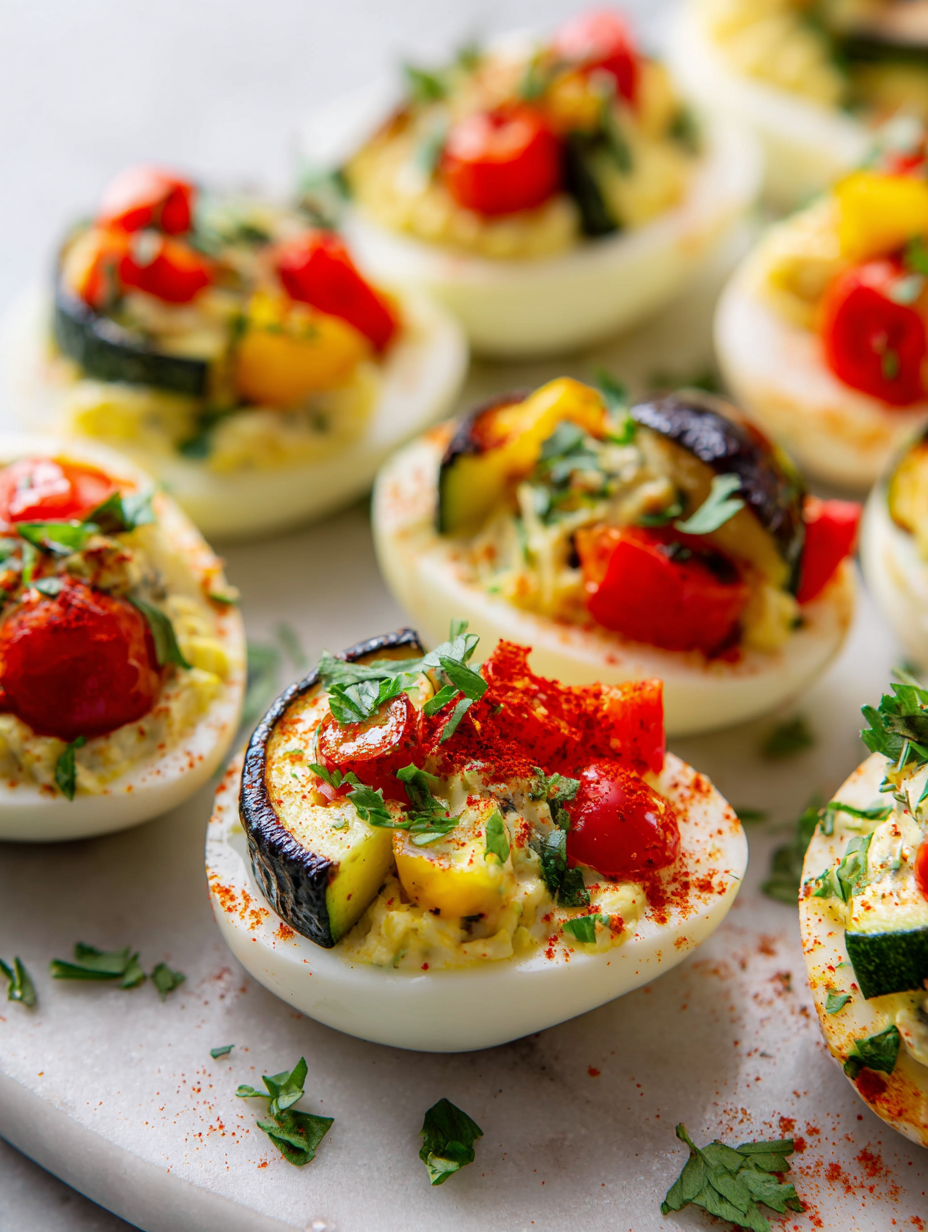
Roasted Vegetable Stuffed Eggs
Ingredients
Equipment
Method
- Place the eggs in a saucepan and cover with cold water. Bring to a boil over medium-high heat, then turn off the heat, cover, and let sit for 10 minutes. Transfer eggs to an ice bath to cool, then peel carefully.
- Slice each egg in half lengthwise with a sharp knife and gently remove the yolks into a mixing bowl, keeping the whites intact on a plate.
- Mash the yolks with a fork until smooth, then stir in mayonnaise, Dijon mustard, smoked paprika, and chopped roasted vegetables. Mix thoroughly until the filling is creamy and well combined, adjusting seasoning with salt and pepper.
- Transfer the yolk mixture into a piping bag fitted with a round tip or use a small spoon. Pipe or spoon the filling neatly into each egg white half, creating a small mound or swirl on top.
- Garnish each stuffed egg with chopped chives or parsley, and add a dash of hot sauce or capers if desired. Arrange on a serving plate for an attractive presentation.
- Serve immediately for the freshest flavor, or refrigerate for up to 4 hours. Before serving, let the eggs sit at room temperature for a few minutes to enhance flavor and texture.
Pro tips for stuffed eggs
- Use a piping bag for a neat, uniform filling that looks professional.
- Slightly undercook eggs initially; they will firm up during chilling and filling.
- Mix filling ingredients thoroughly to achieve a silky, cohesive texture.
- For smoky flavor, add a pinch of smoked paprika to the yolk mixture.
- Chill the filled eggs for at least 15 minutes to set the filling and enhance flavor.
- Use a small spoon or piping bag with a round tip for clean, precise filling.
- Garnish with fresh herbs just before serving to keep their vibrant flavor and color.
Common mistakes and how to fix them
- FORGOT to check egg doneness → Overcooked eggs turn rubbery; cool immediately in ice water.
- DUMPED filling too early → Let the filling set in fridge for 10 minutes for better piping.
- OVER-TORCHED the yolks → Cook eggs at a gentle simmer, avoid boiling too vigorously.
- MISSED seasoning balance → Taste filling before piping, adjust salt, pepper, or acidity accordingly.
Quick fixes and pantry swaps
- If eggs crack during boiling, lower heat and use a gentle simmer.
- Splash cold water on peeled eggs to stop cooking and prevent green rings.
- Patch over cracked eggs with a bit of extra mayo and mash into filling.
- Shield filling from drying out by covering with plastic wrap if not served immediately.
- Swap canned or jarred roasted peppers if fresh ones aren’t available; they add smoky sweetness.
Prep, store, and reheat tips
- Prepare the yolk mixture and fill the egg whites up to 2 hours ahead. Keep covered in the fridge, the filling stays fresh and flavorful, with a creamy texture that holds well.
- Store filled eggs in an airtight container in the fridge for up to 4 hours. The eggs will firm up slightly, and flavors meld better after chilling.
- If making ahead longer than 4 hours, cover tightly with plastic wrap to prevent absorption of fridge odors. The texture may become a little firmer, but still tasty.
- Reheat leftovers gently in the fridge—let come to room temperature before serving. The filling may lose a bit of its silky feel but retains its flavor and freshness.
Top questions about stuffed eggs
1. Can I use fresh vegetables instead of leftovers?
Use leftover roasted vegetables for a smoky, sweet flavor that adds texture and interest.
2. Can I substitute fresh vegetables for leftovers?
Yes, roast fresh veggies at 200°C (400°F) until tender and slightly caramelized, about 20 minutes.
3. What’s a good mayo substitute?
Mix mayonnaise with Greek yogurt for a tangy, lighter filling if you prefer less richness.
4. How do I fill the eggs evenly?
Use a piping bag or a small spoon to fill eggs neatly and avoid mess.
5. Should I refrigerate the stuffed eggs before serving?
Chill the stuffed eggs for at least 15 minutes to set the filling and improve flavor.
6. How can I boost the flavor of the filling?
Add a pinch of smoked paprika or hot sauce to enhance flavor and add a smoky or spicy kick.
7. How do I avoid overcooking the eggs?
Overcooked eggs become rubbery; cool them immediately in ice water to stop the cooking process.
8. How do I ensure the filling is seasoned correctly?
Taste the filling before piping to adjust seasoning, adding more salt, pepper, or acidity as needed.
9. How long can I store stuffed eggs?
Store filled eggs in an airtight container for up to 4 hours; longer refrigeration can make the filling firmer.
10. What if my eggs crack during boiling?
If eggs crack during boiling, lower the heat and cook gently to prevent shattering.
These stuffed eggs, with their smoky roasted veggie filling, are my go-to for turning fridge scraps into something special. They’re simple but feel a little fancy, perfect for when you want a snack that’s both satisfying and a bit unexpected. Honestly, once you get the hang of it, they’ll sneak into your regular rotation.
They’re a reminder that comfort food can also be inventive, especially when seasonality and leftovers collide. Plus, they’re just the right bite-sized thing to keep around for busy afternoons or spontaneous get-togethers. So, let these humble eggs be your next small triumph in the kitchen.

Hi, I’m Theo Granger, the voice and recipe creator behind Boldly Overseasoning.
If you believe salt is not the enemy, spices should be generous, and flavor should never whisper when it can sing, then you are absolutely in the right place. Boldly Overseasoning is my unapologetic celebration of big flavor, confident cooking, and trusting your instincts in the kitchen. I created this space for people who are done with bland food and ready to cook with courage.


Leave a Reply