
Street food stalls have a way of making me nostalgic, especially when I bite into those smoky, marinated chicken skewers. There’s something about the way the marinade seeps into the meat, giving it that perfect balance of tang, spice, and char, that just clicks with me. I’ve spent years trying to recreate that vibrant, lively flavor at home, and it’s honestly easier than you’d think.
This recipe is my humble attempt to capture that street vendor magic, but with a personal twist. I like to experiment with different marinades—sometimes lemon-bright, sometimes smoky paprika—depending on what kind of mood I’m in. It’s a simple process, but the payoff is a skewered bite that feels like a little celebration, no matter what’s on the plate.
Focusing on marinades inspired by street food vendors, I love how a simple tweak can turn chicken skewers into a flavor-packed, nostalgic bite.
The story behind this recipe
- I first stumbled upon this recipe during a summer trip to a bustling outdoor market, where the smell of smoky spice and grilled meat filled the air. Watching street vendors skillfully thread marinated chicken onto skewers and cook over open flames made me realize how simple ingredients can transform into something truly flavorful. That moment stuck with me, and I’ve been trying to replicate that smoky, tangy magic at home ever since.
- What keeps pulling me back to this recipe is how adaptable it is—each time, I tweak the marinade based on what’s in the fridge or just what flavor I crave that day. Sometimes I lean into a citrusy punch, other times I go for a smoky paprika hit. It’s a way to bring a little street-food chaos into my kitchen, no matter the season.
- This dish isn’t just about flavor; it’s about the messy joy of grilling, the satisfying crackle of searing meat, and the smell that lingers in the air long after dinner’s gone. It’s a reminder that good food can be simple, bold, and a little bit wild, even at home.
Key ingredients and tips
- Chicken thighs: I prefer thighs for their juicy, forgiving nature. If you want leaner meat, try breasts, but don’t overcook or they’ll dry out.
- Olive oil: I use a good-quality extra virgin for that fruity, rich base. Skip it for a lighter marinade, but the flavor will be less lush.
- Lemon juice: Brightens everything with a zing that cuts through the spices. If lemons are scarce, a splash of vinegar works, but it’s not quite the same.
- Paprika: Adds smoky depth and a vibrant hue. Smoked paprika gives more richness; sweet paprika keeps it milder—choose based on your mood.
- Garlic: I love the punch of fresh garlic, especially when it’s mellow and fragrant after a quick marinade. Dried garlic powder can replace fresh in a pinch, but it’s less vibrant.
- Soy sauce: I reach for it for that umami hit and a touch of salt. Tamari is a gluten-free swap, but reduce salt if you go that route.
- Herbs: Fresh parsley or cilantro give a burst of freshness. Dried herbs work in a pinch, but they won’t pop as much during grilling.
Spotlight on key ingredients
Chicken thighs:
- I prefer thighs for their juicy, forgiving nature. If you want leaner meat, try breasts, but don’t overcook or they’ll dry out.
- Olive oil: I use a good-quality extra virgin for that fruity, rich base. Skip it for a lighter marinade, but the flavor will be less lush.
- Lemon juice: Brightens everything with a zing that cuts through the spices. If lemons are scarce, a splash of vinegar works, but it’s not quite the same.
Paprika and garlic:
- Paprika: Adds smoky depth and a vibrant hue. Smoked paprika gives more richness; sweet paprika keeps it milder—choose based on your mood.
- Garlic: I love the punch of fresh garlic, especially when it’s mellow and fragrant after a quick marinade. Dried garlic powder can replace fresh in a pinch, but it’s less vibrant.
Notes for ingredient swaps
- Dairy-Free: Skip dairy-based marinades, focus on oil, citrus, and herbs for bright, fresh flavor.
- Low-Sodium: Use reduced soy sauce and omit added salt; the marinade will be less salty but still flavorful.
- Sweetener Swap: Honey can be replaced with maple syrup or agave, adding a different but pleasant sweetness.
- Oil Options: Swap olive oil for avocado or sesame oil for nuttier, richer notes, especially if you like a toastier aroma.
- Herb Variations: Fresh thyme or oregano can replace parsley or cilantro, changing the herbal punch.
- Spice Level: Incorporate cayenne or chili flakes for heat, or omit for milder skewers, but adjust marinade accordingly.
- Vinegar Swaps: Lemon juice can be replaced with lime or a splash of apple cider vinegar for varied brightness.
Equipment & Tools
- Skewers: To thread and hold the chicken pieces for grilling.
- Grill or grill pan: To cook the skewers evenly with good sear.
- Small bowl: To mix and hold the marinade.
- Tongs: To turn and handle the skewers safely.
- Brush: To apply oil or marinade during grilling.
Step-by-step guide to chicken skewers
- Gather your equipment: skewers, grill or grill pan, small bowl, tongs, brush.
- If using wooden skewers, soak them in water for at least 30 minutes to prevent burning.
- Prepare the marinade: in a bowl, combine olive oil, lemon juice, minced garlic, smoked paprika, soy sauce, salt, pepper, and chopped herbs. Mix well.
- Cut chicken thighs into 2-inch cubes. Pat dry with paper towels to ensure good searing.
- Thread the chicken pieces onto the skewers, leaving a little space between each for even cooking.
- Preheat your grill or grill pan to medium-high heat (~200°C / 390°F).
- Brush the grill with a bit of oil to prevent sticking. Place skewers on the hot grill.
- Cook for about 10-12 minutes, turning every 2-3 minutes, until the chicken is golden and slightly charred.
- Check for doneness: the chicken should be juicy and firm, with a slight bounce when pressed.
- Once cooked, remove skewers and let rest for 2-3 minutes. This helps juices redistribute.
- Serve hot with a squeeze of fresh lemon and a sprinkle of herbs for brightness.
Remove skewers from the grill and let rest for 2-3 minutes. Serve with lemon wedges and fresh herbs for an added zing.
How to Know It’s Done
- Color: golden brown with slight charring in spots.
- Juiciness: meat feels firm but not dry when pressed.
- Internal temperature: 75°C / 165°F when tested with a probe.
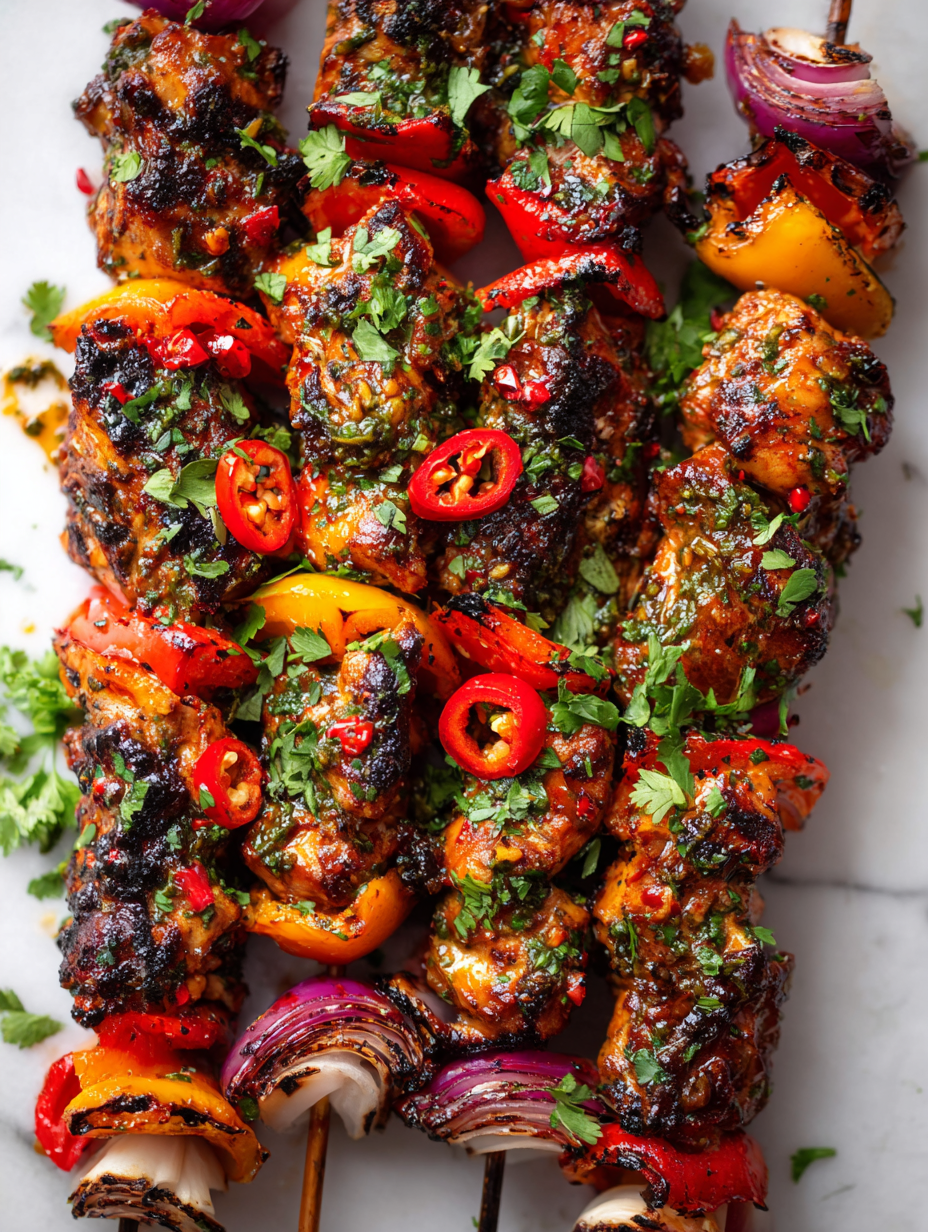
Street-Style Marinated Chicken Skewers
Ingredients
Equipment
Method
- Soak wooden skewers in water for at least 30 minutes to prevent burning during grilling.
- In a small bowl, whisk together olive oil, lemon juice, minced garlic, smoked paprika, soy sauce, and a pinch of salt and pepper until well combined. This creates a vibrant marinade filled with smoky and tangy notes.
- Pat the chicken thighs dry with paper towels, then cut into 2-inch cubes. Dry meat helps achieve a good sear and prevents steaming on the grill.
- Place the chicken cubes in the marinade, turning to coat all sides evenly. Cover and refrigerate for at least 1 hour, or up to 24 hours for maximum flavor penetration.
- Thread the marinated chicken pieces onto the soaked skewers, leaving a small space between each piece to promote even cooking and searing.
- Preheat your grill or grill pan to medium-high heat, around 200°C / 390°F, until hot and ready for cooking.
- Lightly brush the grill grates or pan with oil to prevent sticking. Place the skewers on the grill and cook for about 10-12 minutes, turning every 2-3 minutes for even charring and cooking.
- Look for a golden-brown exterior with slight charring in spots, and ensure the internal temperature reaches 75°C / 165°F for juicy, fully cooked chicken.
- Remove the skewers from the grill and rest for 2-3 minutes, allowing the juices to redistribute and stay moist.
- Squeeze fresh lemon over the skewers, sprinkle with chopped herbs, and serve immediately for a lively, flavorful experience.
Pro tips for perfect chicken skewers
- Use a hot grill or grill pan—around 200°C / 390°F—to get that perfect sear.
- Turn skewers every 2-3 minutes—keeps the chicken evenly cooked and prevents burning.
- Check for doneness with a probe—75°C / 165°F inside, and juices run clear.
- Rest skewers for 2-3 minutes—allows juices to redistribute and keeps meat juicy.
- Marinate for at least 1 hour—deepens flavor and tenderizes the chicken.
- Soak wooden skewers—30 minutes before grilling to prevent flare-ups.
- Use tongs—gives control for turning and handling hot skewers safely.
Common mistakes and how to fix them
- FORGOT to soak wooden skewers → Soak for 30 minutes to prevent burning.
- DUMPED marinade too early → Marinate for at least 1 hour for depth of flavor.
- OVER-TORCHED skewers → Turn frequently and watch for charring, not just color.
- MISSED internal temp → Probe to 75°C / 165°F for perfect juiciness.
Rapid fixes for common grilling hiccups
- When skewers burn, splash them with a little water to cool the flames quickly.
- If chicken sticks or tears, patch with a quick brush of marinade and gentle turning.
- DUMPED marinade too early? Rest the skewers for 10 minutes to let flavors settle.
- Overcooked or dry chicken? Shield with a quick drizzle of lemon juice before serving.
- Pan too dry? Rescue with a splash of broth or water, then simmer briefly for moisture.
Prep, store, and reheat tips
- Marinate the chicken up to 24 hours ahead in the fridge; the flavors deepen and become more melding.
- Skewers can be assembled a few hours in advance and kept covered in the fridge; keeps things organized and ready to grill.
- Store leftovers in an airtight container in the fridge for up to 3 days; the meat stays juicy, but the marinade flavor will mellow.
- Reheat gently in a skillet over low heat or in the oven at 180°C / 350°F until warmed through, about 10 minutes; avoid drying out the meat.
- For best sensory results, reheat until you hear a slight crackle or smell that familiar grilled aroma, then serve promptly.
Questions about Chicken Skewers
1. Can I use chicken breasts instead of thighs?
Use chicken thighs for juiciness and flavor, as they stay tender when grilled. Breasts can dry out quickly, so watch your timing.
2. Do I need to soak skewers? How long?
Soak wooden skewers in water for at least 30 minutes before threading the chicken. This prevents them from catching fire on the grill.
3. How long should I marinate the chicken?
Marinate the chicken for at least an hour to let the flavors penetrate. For a deeper taste, marinate up to 24 hours in the fridge.
4. What temperature should the grill be?
Preheat your grill or grill pan to medium-high, around 200°C / 390°F. Proper heat gives a good sear and smoky flavor.
5. How do I know when chicken skewers are done?
Cook the skewers for about 10-12 minutes, turning every few minutes, until the chicken is golden and cooked through. Check for an internal temp of 75°C / 165°F.
6. What if I burn the skewers?
If the skewers burn or char too much, reduce heat or turn more frequently. If the chicken isn’t cooked, lower the heat and cook a bit longer.
7. Should I rest the chicken after cooking?
Rest the cooked skewers for about 2-3 minutes before serving. This helps juices settle and keeps the meat moist.
8. Can I swap soy sauce?
You can substitute soy sauce with tamari or coconut aminos for a gluten-free option, but it will alter the umami flavor slightly.
9. Can I use dried herbs instead of fresh?
Use fresh herbs like parsley or cilantro for brightness. Dried herbs work but won’t have the same vibrant pop during grilling.
10. How should I store and reheat leftovers?
Leftover cooked skewers can be stored in the fridge for up to 3 days. Reheat gently in a skillet or oven until warmed and listen for a little crackle.
Cooking these chicken skewers brings back memories of summer barbecues and lively gatherings. The smoky aroma and juicy bites remind me that good food is often about simple pleasures and shared moments.
Even now, I find myself craving that perfect char and zingy marinade, especially when I want a quick, satisfying meal that feels a little special. It’s honestly a go-to for making something flavorful and unpretentious, no fuss needed.

Hi, I’m Theo Granger, the voice and recipe creator behind Boldly Overseasoning.
If you believe salt is not the enemy, spices should be generous, and flavor should never whisper when it can sing, then you are absolutely in the right place. Boldly Overseasoning is my unapologetic celebration of big flavor, confident cooking, and trusting your instincts in the kitchen. I created this space for people who are done with bland food and ready to cook with courage.





Leave a Reply