
These chicken lettuce wraps take me straight back to childhood lunches, where crunchy iceberg and juicy chicken were king. But I’ve learned to tweak that nostalgic combo—adding fresh herbs and a zingy sauce—to make it feel like a special treat, not just a quick fix. It’s funny how a simple dish like this can carry so many memories, yet still surprise me with new flavors each time I make it.
There’s something about wrapping tender, seasoned chicken in crisp lettuce that feels like a little victory—like reclaiming a childhood comfort food and giving it a fresh, lively twist. It’s quick to assemble, perfect for busy weeknights, but also a dish I find myself craving on weekends when I want something satisfying without the fuss. This recipe is honest, straightforward, and deeply personal; a reminder that good food connects us to our pasts while still feeling fresh and new.
Focusing on the nostalgic comfort of childhood, but elevating it with fresh herbs and a crispy lettuce crunch, turning a simple dish into a moment of everyday celebration.
The story behind this recipe
This recipe was born from a lazy weekend experiment when I had a pound of leftover cooked chicken and a fridge full of fresh greens. I remembered childhood lunches where crispy lettuce and savory fillings made everything feel simple but special. Over the years, I’ve played with different herbs, sauces, and textures, trying to keep that nostalgic crunch alive but with a grown-up twist. It’s funny how a dish so humble can carry so many memories and still feel exciting every time I make it.
Ingredient breakdown: key components
- Ground chicken: I like to use a mix of thigh and breast for juiciness and flavor, but you can swap in turkey if you prefer leaner meat. The sizzle when it hits the pan is a good sign you’re on track.
- Lettuce leaves: Crunchy iceberg is classic, but romaine or butter lettuce work too. Look for leaves that are firm and bright, not wilted, to give that satisfying crunch with each bite.
- Soy sauce: I prefer a good-quality, naturally brewed soy for depth, but coconut aminos can be a soy-free alternative. It’ll add that umami punch without the saltiness that can overwhelm.
- Ginger: Fresh ginger adds a bright, spicy kick—use about a teaspoon grated finely. If you only have ground, reduce it to half the amount to avoid overpowering the delicate balance.
- Garlic: I love a lot of garlic here—it’s the backbone of the filling. Sauté it just until fragrant, watch it don’t burn or it gets bitter; a quick crackle is your cue.
- Hoisin or oyster sauce: This adds a sweet, savory richness that makes the filling cling to your lettuce. If you want it lighter, a splash of fish sauce or a drizzle of honey can do the trick.
- Green onions: Thinly sliced, they bring a fresh sharpness that cuts through the richness. Add just before serving so they stay crisp and vibrant, not soggy.
Spotlight on key ingredients
Chicken:
- Ground chicken: I prefer a mix of thigh and breast for juiciness, but turkey works too. When it hits the hot pan, it sizzles with promise.
- Lettuce leaves: Crisp iceberg is classic, but romaine or butter lettuce add different textures. Look for bright, firm leaves that crackle when you bite into them.
Ginger:
- Soy sauce: I choose naturally brewed for depth, but coconut aminos give a milder, slightly sweeter umami—try both to see what sticks.
- Fresh ginger adds a zesty, bright heat that wakes up the filling. When sautéed, it releases a spicy aroma that’s almost intoxicating.
Notes for ingredient swaps
- Protein: Chicken thighs are juicier and more flavorful than breasts, but turkey or even tofu work well too. Aim for a similar texture, but be prepared for different cooking times.
- Lettuce: Romaine or butter lettuce can replace iceberg for a softer bite or more flavor. Look for crisp, fresh leaves—avoid limp or browned ones.
- Soy Sauce: Coconut aminos make a good soy-free swap, maintaining that umami hit but with a slightly sweeter, milder flavor.
- Ginger: Fresh ginger provides a zesty punch, but ground ginger can be used in a pinch—use half the amount to avoid overpowering.
- Garlic: Fresh minced garlic is best, but garlic powder works if you’re in a rush—use about half as much, as it’s more concentrated.
- Hoisin/Oyster Sauce: For a lighter or vegetarian version, try a splash of hoisin or add a touch of honey mixed with soy. Fish sauce can also bring umami without sweetness.
- Green Onions: Scallions or chives add a similar fresh bite. If you don’t have any, a squeeze of lemon or lime can brighten the filling.
Equipment & Tools
- Large skillet: Cook and brown the chicken evenly.
- Spatula or wooden spoon: Break up and stir the meat for even cooking.
- Small bowl: Mix sauces and keep ingredients handy.
- Grater: Finely grate ginger and garlic for maximum flavor.
Step-by-step guide to chicken wraps
- Equipment & Tools: Gather a large skillet (preferably non-stick), a spatula or wooden spoon, a small bowl for mixing, and a grater for ginger and garlic.
- Heat the skillet over medium-high heat (around 180°C / 356°F). Add a splash of oil—just enough to coat the bottom.
- a. Add ground chicken to the pan. Break it up with your spatula. Cook until no longer pink, about 5-7 minutes. b. Stir frequently, ensuring even browning. c. When cooked through and slightly caramelized, transfer to a bowl.
- In the same skillet, reduce heat slightly to medium. Add grated ginger and minced garlic. Sauté until fragrant, about 30 seconds to 1 minute. Watch for a golden aroma, not burnt smell.
- a. Return cooked chicken to the skillet. b. Add soy sauce, hoisin or oyster sauce, and chopped green onions. c. Stir well, cook for another 2 minutes until everything is coated and heated through. The filling should smell savory and slightly sweet, with a glossy appearance.
- Remove from heat. Let the mixture rest for 2-3 minutes to allow flavors to meld. While it cools slightly, prepare your lettuce leaves by washing and patting them dry.
- To serve, spoon a generous amount of filling into each lettuce leaf. Wrap tightly and serve immediately.
- Finish by arranging wraps on a plate. Garnish with extra green onions or herbs if desired. Serve with a side of dipping sauce or extra soy.
Let the filling rest briefly to enhance flavor. Serve immediately by spooning into crisp lettuce leaves. Garnish with herbs or extra sauce for presentation and added flavor.
How to Know It’s Done
- Chicken is cooked through, no pink inside, with a slight caramelized crust.
- Aromas of garlic, ginger, and savory sauce fill the air—indicating proper sautéing.
- Lettuce leaves are crisp, vibrant, and sturdy enough to hold filling without tearing.
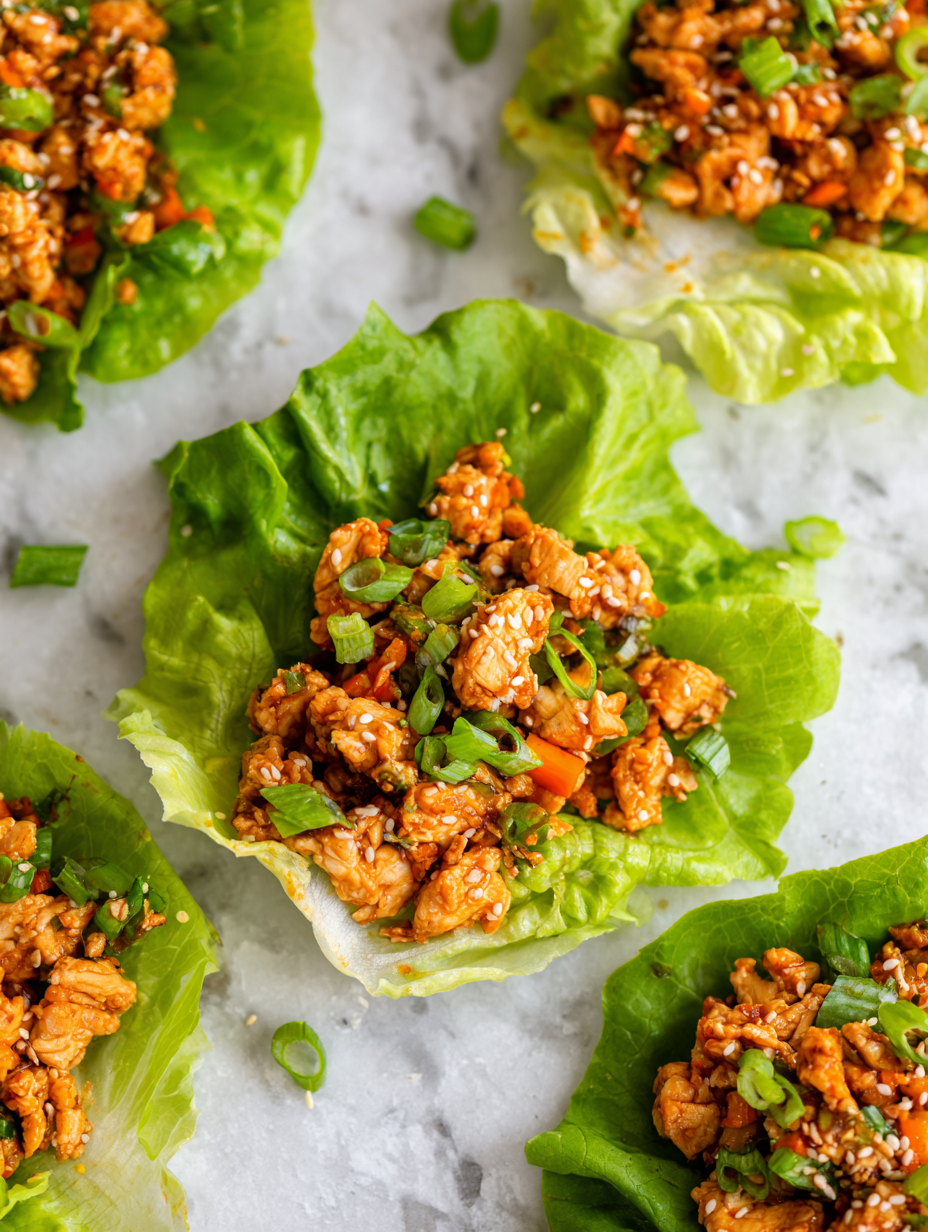
Chicken Lettuce Wraps
Ingredients
Equipment
Method
- Gather your skillet, spatula, small bowl, and grater, and heat the skillet over medium-high heat until shimmering.
- Add the ground chicken to the skillet, breaking it apart with your spatula. Cook for about 5-7 minutes, stirring frequently, until the chicken is no longer pink and develops a slight golden sear.
- Transfer the cooked chicken to a small bowl and set aside. In the same skillet, add the grated ginger and minced garlic, sautéing just until fragrant, about 30 seconds, until you smell a spicy aroma filling the air.
- Return the cooked chicken to the skillet, then add soy sauce, hoisin or oyster sauce, and sliced green onions. Stir everything together and cook for another 2 minutes, allowing the flavors to meld and the sauce to coat the chicken evenly.
- Remove the skillet from heat and let the filling rest for 2-3 minutes. Meanwhile, wash and dry the lettuce leaves thoroughly, patting them dry to ensure they stay crisp.
- Spoon a generous amount of the flavorful chicken mixture onto each lettuce leaf, then wrap tightly to form a neat bundle. Repeat with remaining leaves and filling.
- Arrange the wraps on a serving plate, optionally garnishing with extra sliced green onions or herbs for color and freshness.
Notes
Tips for perfect wraps
- Bolded mini-head: Use high heat for a quick sear—listen for a sharp crackle and see the chicken develop a slight golden crust.
- Bolded mini-head: Keep ingredients dry—pat lettuce leaves thoroughly to prevent sogginess and maintain crunch.
- Bolded mini-head: Stir-fry aromatics just until fragrant—this releases their essential oils and deepens flavor without burning.
- Bolded mini-head: Don’t overcook the chicken—remove from heat as soon as it’s no longer pink, to stay juicy and tender.
- Bolded mini-head: Taste and adjust sauces at the end—adding a splash of soy or a squeeze of lime can brighten the overall flavor.
- Bolded mini-head: Use a non-stick skillet for easy flipping and less oil—this helps keep the filling juicy and the skillet clean.
- Bolded mini-head: Chill the filling slightly before serving—this helps flavors meld and makes wrapping easier without tearing the lettuce.
Common mistakes and how to fix them
- FORGOT to preheat the pan → Always heat until hot before adding ingredients.
- DUMPED too much oil → Use just enough to coat the skillet lightly.
- OVER-TORCHED the chicken → Cook over medium heat to prevent burning and dryness.
- SKIPPED resting the filling → Let it sit 2 minutes for better flavor melding.
Quick fixes and pantry swaps
- If chicken releases excess juice, splash a bit of soy to intensify flavor.
- When lettuce wilts, patch with a fresh leaf for crispness and visual appeal.
- Splash a drop of water on a dry skillet—shimmering steam indicates proper heat.
- Dump too much oil? Use paper towel to absorb excess and prevent sogginess.
- Overcooked filling? Shield with a lid and reheat gently to revive moisture.
Prep, store, and reheat tips
- Prep the filling ahead by cooking the chicken and mixing sauces; store in an airtight container for up to 2 days. The savory aroma will deepen overnight.
- Wash and thoroughly dry lettuce leaves the day before. Keep them wrapped in a damp paper towel inside a sealed bag—crispness stays longer.
- The cooked chicken filling can be refrigerated for 24-48 hours. Reheat gently in a skillet over low heat until just warmed—look for a slight sizzle and restored aroma.
- Avoid freezing the assembled wraps; the lettuce will become soggy upon thawing, but the filling reheats well for quick lunches or dinners.
Top questions about chicken lettuce wraps
1. Can I use raw chicken instead of cooked?
Use cooked, shredded chicken for convenience or raw chicken minced finely if you prefer a fresher taste. The texture varies but both work well.
2. Can I cook the chicken directly in the filling?
Yes, just cook the raw chicken thoroughly in the skillet, breaking it apart as it cooks, until no pink remains.
3. What kind of lettuce should I use?
Fresh, crispy lettuce like iceberg or romaine is best. It adds crunch and freshness—avoid soggy or wilted leaves.
4. Can I make this soy-free?
You can swap soy sauce for coconut aminos or tamari for a gluten-free version, adjusting saltiness as needed.
5. How do I customize the sauce?
Adjust the sauces according to your taste—more hoisin for sweetness, or less if you prefer a lighter flavor.
6. Can I prepare the filling in advance?
Make the filling ahead, store in the fridge for up to 2 days. Reheat gently before serving to keep it juicy.
7. What pan should I use?
Use a non-stick skillet for quick, even cooking and less oil. It helps keep the filling tender and avoids sticking.
8. How much filling should I put in each wrap?
Overfilling can tear the lettuce; use a generous but manageable scoop to keep wraps intact.
9. How do I keep wraps crisp?
If the lettuce gets soggy, wrap loosely in a paper towel and keep in the fridge until ready to serve.
10. What if the filling sticks to the pan?
Use a bit of water to deglaze the pan if the filling sticks; it helps loosen flavors without losing moisture.
These chicken lettuce wraps aren’t just a quick meal—they’re a small act of reclaiming childhood comfort with a fresh twist. The crispy lettuce and savory filling make every bite a little celebration of familiar flavors made brighter. They remind me that good food doesn’t have to be fancy to feel meaningful.
Whenever I make these, I appreciate how simple ingredients can come together so effortlessly, yet still carry a punch of nostalgia and fresh energy. They’re perfect for busy days or when I want something satisfying but not heavy. Sometimes, it’s these honest, straightforward dishes that stick with us the longest.

Hi, I’m Theo Granger, the voice and recipe creator behind Boldly Overseasoning.
If you believe salt is not the enemy, spices should be generous, and flavor should never whisper when it can sing, then you are absolutely in the right place. Boldly Overseasoning is my unapologetic celebration of big flavor, confident cooking, and trusting your instincts in the kitchen. I created this space for people who are done with bland food and ready to cook with courage.

Leave a Reply