
Sometimes, a simple sauce can turn an everyday piece of fish into something special. This lemon butter cod is just that—a quick, bright, and buttery transformation that feels fancy but is dead simple to pull off after a long day.
I love how the tangy lemon and rich butter come together to highlight the mild sweetness of cod. It’s one of those dishes that makes you feel like you’re eating at a cozy seaside restaurant, right in your own kitchen, without any fuss or complicated techniques.
This recipe is perfect for weeknights when I want something comforting yet elegant. It’s honest, straightforward, and the kind of meal that leaves you satisfied with every bite—and maybe a little eager to make it again tomorrow.
Focusing on how a simple lemon butter sauce can elevate humble cod into a dish that feels like a special treat, perfect for weeknights when you want elegance without fuss.
A Simple Twist on Fish
- This dish always reminds me of lazy summer evenings by the coast, where fresh fish is just part of the air.
- There’s a small thrill in squeezing that bright lemon at the end, feeling the zing hit your fingertips before the first bite.
- I used to think making fish fancy was complicated, but this recipe proved otherwise—simple ingredients, big flavor.
- Sharing this with friends feels like a little celebration, even if it’s just a Tuesday night dinner.
- Cooking this makes me nostalgic for early mornings at the market, hunting for the best fresh cod and ripe lemons.
A Simple Twist on Fish
- This recipe sprouted from a craving for something bright and buttery that didn’t require a lot of fuss. One evening, I had some cod in the fridge and a lemon that was just begging to be used up fast. The result was this simple sauce that makes the fish feel like a special occasion, even on a weeknight.
- I remember the first time I cooked it, the way the butter and lemon sizzled together in the pan, filling the kitchen with a fresh, inviting aroma. It was a small victory—quick, elegant, and comforting all at once. Now, I keep this recipe close, especially when I want something satisfying without the chaos.
- heading
- story_type
Historical & Cultural Notes
- This dish has roots in coastal European cuisines where fresh seafood and citrus pair naturally, especially in Mediterranean and Scandinavian traditions.
- The combination of lemon and butter on fish dates back centuries, originally used to preserve and flavor fish before refrigeration became common.
- In some fishing communities, this simple sauce was a way to elevate everyday catch into a celebratory meal, especially during seasonal festivals.
Key Ingredients in Focus
- Cod: I prefer fresh, flaky cod with a mild sweetness—look for firm flesh that jiggles slightly and smells ocean-bright; if unavailable, thaw frozen works fine, just pat dry before cooking.
- Lemon: Bright, juicy lemons bring the zing—choose organic if you can, especially since you’ll be zesting; avoid dull, soft lemons—they won’t give that sharp, clean flavor.
- Butter: I use unsalted, real butter for richness—if you want a dairy-free version, try a good quality plant-based butter, though the flavor will lose some creaminess.
- Garlic: Minced fresh garlic adds that punch—if pressed or minced too early, it can turn bitter; add just before the lemon to keep its bright aroma intact.
- Olive oil: A splash helps prevent sticking—use a good extra virgin for fruity notes; if you prefer less fuss, skip it, but be mindful of sticking, especially if your pan isn’t non-stick.
- Herbs: Parsley or dill brighten the dish—fresh is best, but dried can work in a pinch; add at the end to keep their vibrant flavor and color alive.
- Seasoning: Salt and pepper—don’t be shy with the seasoning to balance the butter and lemon; taste and adjust right before serving for best flavor.
Spotlight on key ingredients
Cod:
- I prefer fresh, flaky cod with a mild sweetness—look for firm flesh that jiggles slightly and smells ocean-bright; if unavailable, thaw frozen works fine, just pat dry before cooking.
- Lemon: Bright, juicy lemons bring the zing—choose organic if you can, especially since you’ll be zesting; avoid dull, soft lemons—they won’t give that sharp, clean flavor.
Lemon:
- Butter: I use unsalted, real butter for richness—if you want a dairy-free version, try a good quality plant-based butter, though the flavor will lose some creaminess.
- Bright, juicy lemons bring the zing—choose organic if you can, especially since you’ll be zesting; avoid dull, soft lemons—they won’t give that sharp, clean flavor.
Notes for ingredient swaps
- Dairy-Free: Swap butter for a good quality plant-based butter or olive oil—less creamy, but still rich and flavorful.
- Citrus Variations: Use lime or orange juice instead of lemon for a different bright, fruity note that still cuts through the richness.
- Fish: If cod isn’t available, halibut or haddock work well—firm, flaky, and mild in flavor. Avoid overly oily fish like salmon here.
- Herbs: Fresh dill or tarragon can replace parsley—each adds a unique aromatic twist, though dill’s more classic with lemon.
- Oil: Canola or vegetable oil in place of olive oil—less flavor, but good for high heat and a neutral base.
- Garlic: Roasted garlic can be used for a mellow, sweet note—add it after cooking the fish for a softer garlic flavor.
- Lemon Zest: Lime zest or a pinch of sumac can add a different tang—use sparingly to avoid overpowering the sauce.
Equipment & Tools
- Non-stick skillet: For even searing and easy flipping.
- Spatula: To carefully turn the fish without breaking it.
- Small whisk: To smoothly incorporate lemon juice and butter into the sauce.
- Plate: To rest the fish and keep it warm.
Step-by-step guide to Lemon Butter Cod
- Gather your equipment: a non-stick skillet, a spatula, a small whisk, and a plate for resting.
- Pat the cod fillets dry with paper towels—this helps get a good sear and prevents steaming.
- Heat the skillet over medium-high heat until hot, about 2 minutes, until it shimmers slightly.
- Add a tablespoon of olive oil, swirling to coat the pan evenly. Wait for it to shimmer—this is your cue.
- Carefully place the cod fillets in the pan, skin-side down if they have skin—press gently for even contact.
- Cook for about 3-4 minutes, until the edges look opaque and the bottom is golden brown. Avoid moving the fish too early.
- Flip the fillets carefully with a spatula, cook for another 2-3 minutes until just cooked through—peek at the thickest part; it should be opaque and flake easily.
- Remove fish from pan and set aside on a plate. Keep warm if serving immediately.
- In the same pan, reduce heat to medium. Add 2 tablespoons of butter, waiting until it melts and starts to foam.
- Add minced garlic (1-2 cloves), cook for 30 seconds until fragrant, then stir in freshly grated lemon zest.
- Squeeze in the juice of one lemon, stirring constantly to combine into a bright, buttery sauce. Adjust heat to maintain a gentle simmer.
- Cook for about 1 minute until the sauce is slightly thickened and fragrant—if it separates, whisk in a teaspoon of cold water to bring it back together.
- Pour the lemon butter sauce over the resting fish, spooning generously to coat.
- Finish with a sprinkle of chopped parsley or dill for color and freshness.
Let the fish rest for a minute to lock in juices. Serve drizzled with the lemon butter sauce, and garnish with fresh herbs for color and aroma.
How to Know It’s Done
- Cod should be opaque and flake easily at the thickest part.
- Lemon butter sauce should be bright, slightly thickened, and fragrant—avoid separation or burning.
- Fish should have a golden crust, with no raw or translucent areas, especially near the edges.
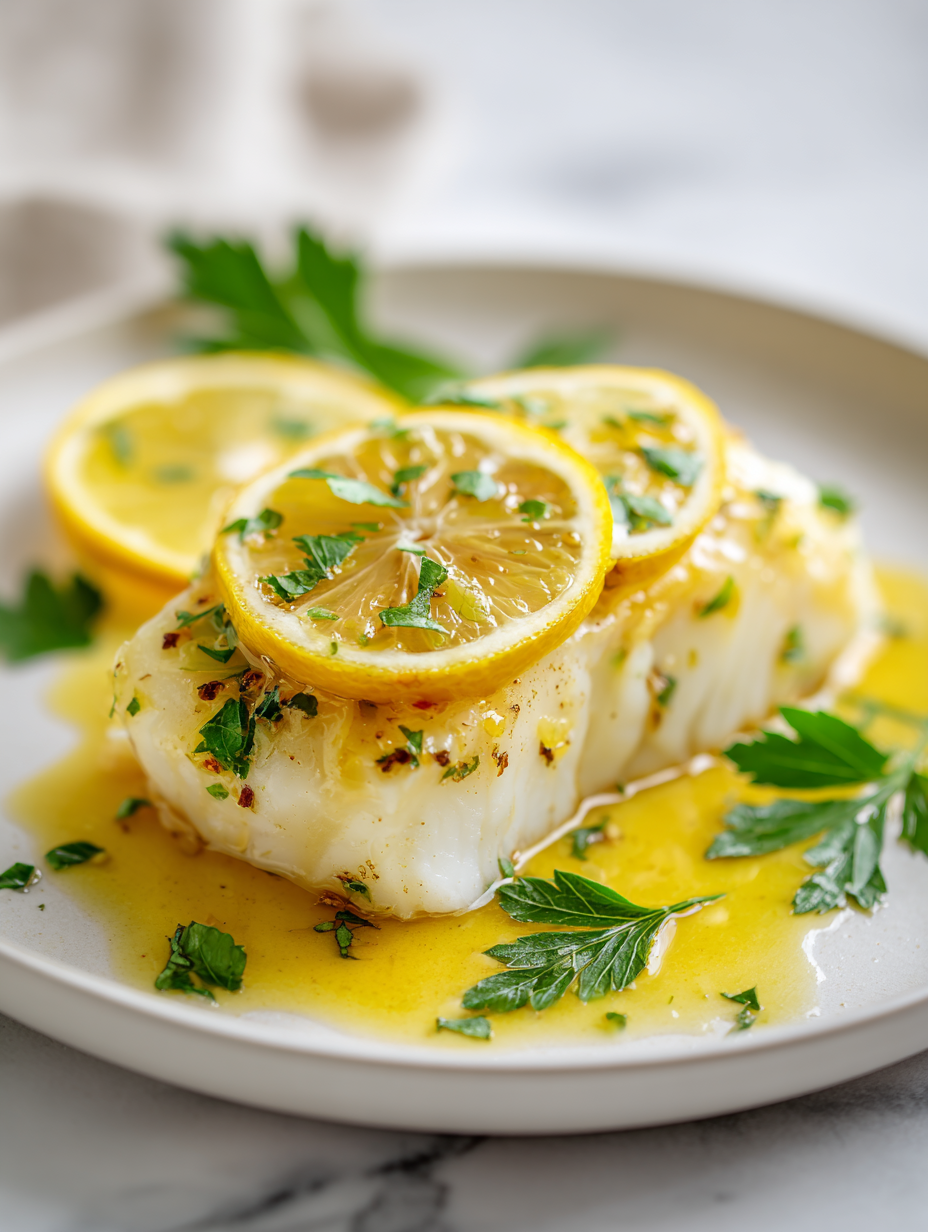
Lemon Butter Cod
Ingredients
Equipment
Method
- Pat the cod fillets dry with paper towels to ensure a good sear, then season both sides generously with salt and pepper.
- Heat a non-stick skillet over medium-high heat until shimmering, about 2 minutes, then add olive oil and swirl to coat the pan evenly.
- Place the cod fillets in the hot pan skin-side down if they have skin, pressing gently to ensure contact and prevent curling. Cook for 3-4 minutes until the edges look opaque and golden brown.
- Carefully flip each fillet with a spatula and cook for another 2-3 minutes until the fish flakes easily and is just cooked through.
- Remove the fish from the pan and set aside on a warm plate, covering loosely with foil if needed to keep warm.
- Reduce the heat to medium, then add the butter to the same pan, allowing it to melt and foam gently, filling the kitchen with a rich aroma.
- Add the minced garlic to the butter, cooking for about 30 seconds until fragrant and slightly golden, stirring constantly.
- Stir in the lemon zest and then squeeze in the lemon juice, whisking continuously to combine into a bright, glossy sauce. Let it simmer gently for about a minute to thicken slightly.
- Taste the sauce and adjust with salt and pepper as needed, then remove from heat to prevent separation.
- Plate the flaky cod fillets and spoon the lemon butter sauce generously over each piece, then garnish with chopped parsley or dill for a fresh pop of color and flavor.
- Serve immediately, enjoying the tender fish coated in a vibrant, buttery lemon sauce that’s perfect for a cozy, elegant dinner.
Tips & Tricks for Perfect Lemon Butter Cod
- Bolded mini-head: Use high heat for a quick sear, it creates a flavorful crust without overcooking the fish.
- Bolded mini-head: Add lemon zest early to release more citrus oils, intensifying the bright aroma in the sauce.
- Bolded mini-head: When cooking the cod, resist the urge to move it too early—wait until it naturally releases from the pan.
- Bolded mini-head: For a glossy sauce, remove the pan from heat before adding the lemon juice to prevent separation.
- Bolded mini-head: Use a small whisk to smoothly incorporate lemon juice and butter, avoiding curdling in the sauce.
- Bolded mini-head: If the butter starts to brown too quickly, lower the heat immediately to prevent bitterness.
- Bolded mini-head: Finish the dish with fresh herbs just before serving to keep their vibrant flavor and color.
Common mistakes and how to fix them
- OVERCOOKED: Fish turns dry and crumbly → Remove from heat early and test for flakiness.
- UNDERSALTED: Fish lacks flavor → Taste the sauce before serving and adjust salt as needed.
- TOO MUCH HEAT: Sauce burns or separates → Keep heat low when simmering butter and lemon.
- MISSED ZEST: Lacking brightness → Add lemon zest early in cooking for a more integrated flavor.
Quick Fixes for Lemon Butter Cod
- If sauce separates, splash in a teaspoon of cold water and whisk vigorously.
- When fish sticks to the pan, patch with a little more oil and gently loosen it.
- Splash lemon juice if sauce is too dull or lacks brightness.
- DUMPED too much salt? Rinse fish quickly and pat dry before cooking again.
- Overcooked fish? Rescue it with a quick drizzle of warm lemon butter, then serve immediately.
Prep, store, and reheat tips
- Prep the lemon zest and garlic ahead; store in an airtight container in the fridge for up to 2 days to keep the aroma fresh and zingy.
- You can assemble the lemon butter sauce up to 1 day in advance; keep it refrigerated and gently rewarm, whisking to bring back its silky texture.
- Cod fillets can be rinsed, patted dry, and kept covered in the fridge for up to 24 hours; avoid marinating to prevent sogginess.
- Reheat cooked fish gently in a warm (not hot) oven or in a skillet over low heat, spooning extra lemon butter for added moisture and flavor.
- The sauce’s bright, buttery notes may soften over time, so drizzle fresh upon reheating for the best lemon zing and richness.
Top questions about Lemon Butter Cod
1. Can I use frozen cod for this recipe?
Use fresh cod if possible. Fresh has a firmer texture and milder flavor, but frozen works well if properly thawed and patted dry. Look for fish that jiggles gently and smells ocean-bright.
2. Should I thaw the cod before cooking?
Yes, but thaw it in the fridge overnight and pat dry thoroughly. Excess moisture can cause splattering and prevent a good sear, so dry fish is key.
3. When should I add the lemon juice?
Lemon juice should be added at the end to keep its bright, tangy flavor intact. Cooking it too early can dull the zing and make the sauce less vibrant.
4. Can I substitute butter with margarine?
Use unsalted butter for control over saltiness. If you prefer, margarine can be used but it won’t have the same rich, creamy feel as butter.
5. How do I know when the cod is done?
Cook the fish until it flakes easily and is opaque in the center, about 3-4 minutes per side depending on thickness. Overcooking makes it dry and crumbly.
6. How should I simmer the lemon butter sauce?
A gentle simmer keeps the sauce bright and silky. Avoid boiling or high heat, which can cause separation and a greasy texture.
7. Can I use dried herbs instead of fresh?
Fresh herbs like parsley or dill add a burst of color and aroma. Dried herbs are okay in a pinch but add them at the end to preserve their flavor.
8. What if the sauce curdles or separates?
If the sauce separates, whisk in a teaspoon of cold water or a little cold butter to bring it back together smoothly.
9. How should I store and reheat leftovers?
Leftovers can be stored in the fridge for up to 2 days in an airtight container. Reheat gently in a skillet or oven, spooning extra lemon butter on top.
10. How do I fix a bland lemon butter sauce?
Adjust seasoning by tasting the sauce before serving. Add a pinch more salt or lemon zest if it needs a brighter or more balanced flavor.
This simple lemon butter cod feels like a little escape—bright, buttery, and perfectly balanced. It’s a reminder that sometimes, the most unassuming ingredients can come together to create something truly memorable. No fuss, just honest flavors that make you want to cook again tomorrow.
In the end, it’s these kind of dishes that stick with me—easy to make, yet special enough to serve any day of the week. A good fish fillet, a squeeze of lemon, and a quick sauce can turn a mundane Tuesday into a quiet celebration. That’s what keeps me coming back to it, season after season.

Hi, I’m Theo Granger, the voice and recipe creator behind Boldly Overseasoning.
If you believe salt is not the enemy, spices should be generous, and flavor should never whisper when it can sing, then you are absolutely in the right place. Boldly Overseasoning is my unapologetic celebration of big flavor, confident cooking, and trusting your instincts in the kitchen. I created this space for people who are done with bland food and ready to cook with courage.








Leave a Reply