
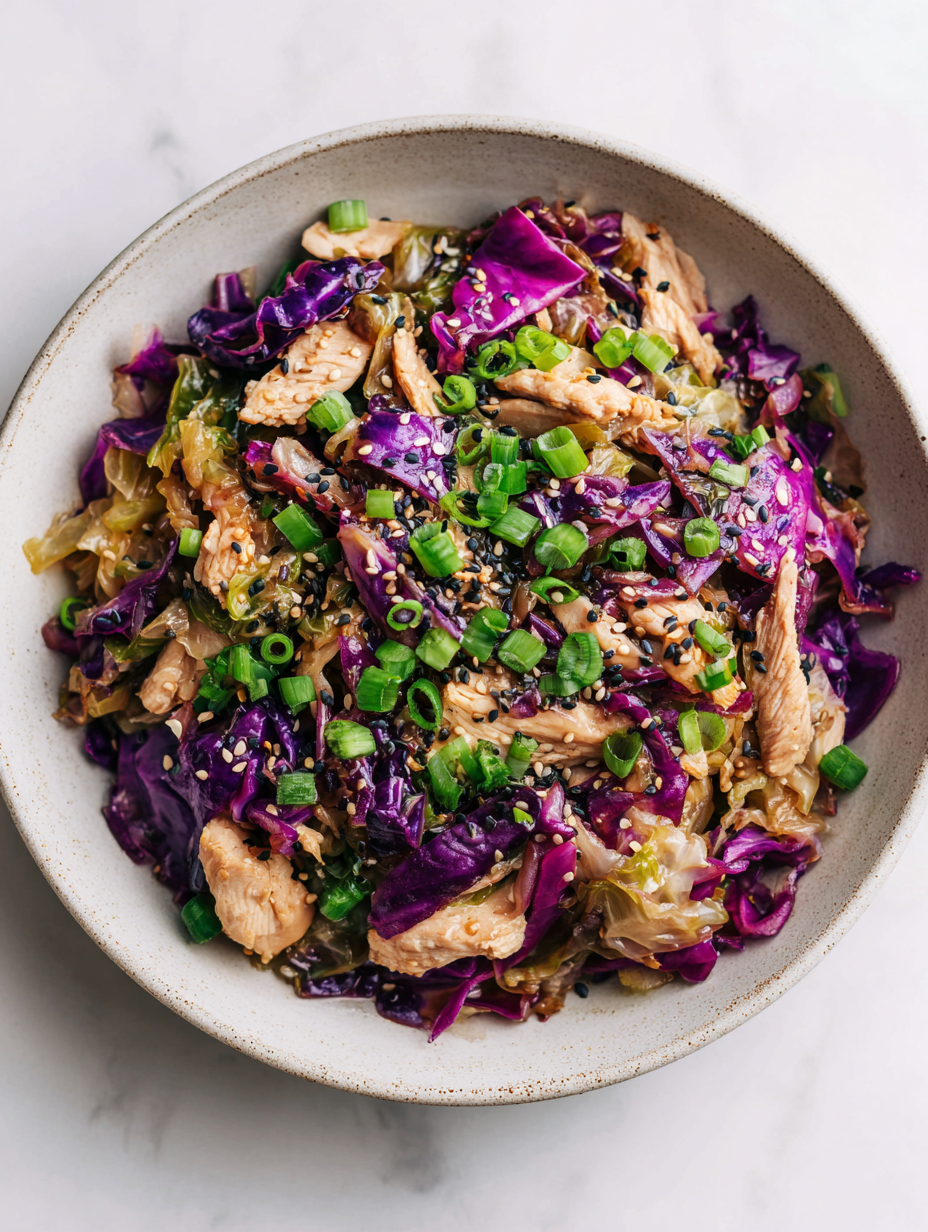
This chicken cabbage stir fry is a quiet hero in my weeknight lineup. It’s not flashy, but it’s honest—simple ingredients coming together with a bit of heat and a splash of soy. I like to think of it as a reminder that you don’t need a long list of spices or fancy techniques to make something satisfying.
What drew me to this dish is how it celebrates the beauty of straightforward cooking. Tender chicken, crisp cabbage, a little garlic, and a tangy soy glaze—these are humble, accessible ingredients that, when handled right, create a surprisingly layered flavor. It’s a meal that feels like a small victory, especially when I want something quick but not rushed.
Plus, it’s a good reminder that sometimes the most unassuming ingredients—like a head of cabbage—can shine if you treat them with care. I’ve made this stir fry on chaotic weeknights, but I’ve also slowed down to enjoy the process, watching the cabbage turn a lovely emerald green and smelling that savory, slightly sweet aroma fill the kitchen.
Focusing on the overlooked beauty of simple ingredients, this stir fry highlights the harmony between tender chicken and crisp cabbage, showing how minimal fuss can still deliver rich, layered flavors.
Celebrating Simplicity in Every Bite
- This dish reminds me that even the simplest ingredients can carry a lot of personality—like that first crispy cabbage leaf.
- Cooking this stir fry takes me back to hurried weeknights when I needed something quick but still crave flavor that sticks with you.
- There’s a quiet pride in turning humble cabbage and chicken into something savory and satisfying without a fuss.
- I love how the aroma of garlic and soy filling the kitchen sparks a little joy, even during the chaos of a busy evening.
- Sometimes, I just need a plate of something honest, with textures that dance—crisp cabbage and tender chicken—no tricks, just good food.
The story behind this recipe
- This stir fry is born from a moment of realizing how often I overlook humble ingredients. One night, I had a head of cabbage and some chicken in the fridge, and instead of reaching for something complicated, I just threw them together with a splash of soy and garlic. That simple act reminded me that good food doesn’t need to be fancy or precise, just honest and quick.
- Over the years, I’ve kept returning to this dish because it’s forgiving—whatever’s in the fridge can usually be tossed in. It’s become my go-to when I want something warm, satisfying, and easy to throw together after a long day. It’s like a small victory in the chaos of weeknights.
- heading: ‘The story behind this recipe’
Historical and Cultural Tidbits
- This stir fry has roots in home-cooked Asian comfort food, blending simple ingredients with quick technique.
- Cabbage, once considered poor man’s produce, gained popularity in stir fries during post-war periods for its affordability and crunch.
- In many Asian cuisines, stir frying vegetables and protein together is a tradition that emphasizes speed and preserving freshness.
- The combination of chicken and cabbage became a staple because it’s nourishing, economical, and adaptable to various sauces.
- Modern twists on this dish often include adding garlic, ginger, or chili to elevate its humble origins.
Key Ingredients Breakdown
- Chicken breast: I prefer boneless, skinless chicken for quick cooking and tender bites—make sure to slice thinly so it cooks evenly and stays juicy.
- Cabbage: A fresh, crisp head with tight leaves gives the best crunch. When stir-fried, it turns a vibrant emerald green—avoid wilted or yellowed leaves.
- Garlic: I love lots of garlic here—its pungent aroma and warm spice really wake up the dish. Mince it finely for even flavor distribution.
- Soy sauce: I use a good-quality, slightly salty soy for depth. If you want a milder taste, dilute with a splash of water or use tamari for less saltiness.
- Oil: A neutral oil like vegetable or canola handles high heat without smoking. When it shimmers, you know it’s ready for stir-frying.
- Sesame oil: Just a drizzle adds a toasted, nutty aroma—use sparingly, as it’s strong and can overpower if used excessively.
- Optional ginger: Fresh ginger adds a spicy brightness—grate it finely so it infuses the oil and coats every bite.
Spotlight on Key Ingredients
Chicken breast:
- I prefer boneless, skinless chicken for quick cooking and tender bites—make sure to slice thinly so it cooks evenly and stays juicy.
- Cabbage: A fresh, crisp head with tight leaves gives the best crunch. When stir-fried, it turns a vibrant emerald green—avoid wilted or yellowed leaves.
- Garlic: I love lots of garlic here—its pungent aroma and warm spice really wake up the dish. Mince it finely for even flavor distribution.
Cabbage:
- A fresh, crisp head with tight leaves gives the best crunch. When stir-fried, it turns a vibrant emerald green—avoid wilted or yellowed leaves.
- Garlic: I love lots of garlic here—its pungent aroma and warm spice really wake up the dish. Mince it finely for even flavor distribution.
Notes for ingredient swaps
- Protein: Chicken thighs → Juicier, more forgiving, but cook a bit longer and watch for extra fat.
- Vegetarian: Tofu or tempeh → Absorbs sauces beautifully; press and cube for best texture.
- Cabbage: Napa or Savoy → Tender and sweet, cooks faster, with a slightly different flavor profile.
- Soy sauce: Coconut aminos → Milder, slightly sweeter, and less salty, good for allergy concerns.
- Oil: Avocado oil → Higher smoke point, neutral flavor, perfect for high heat stir-frying.
- Sesame oil: Peanut oil → Adds a richer, nutty aroma; use sparingly so it doesn’t overpower.
- Ginger: Ground ginger → Faster to use, but fresh ginger provides brighter, sharper flavor.
Equipment & Tools
- Wok or large skillet: Handle high heat and quick stirring.
- Sharp knife: Slice chicken and vegetables evenly.
- Spatula or stir-fry turner: Toss and turn ingredients quickly.
- Prep bowls: Hold sliced ingredients for efficiency.
Step-by-step guide to stir-frying
- Equipment & Tools: Use a large wok or deep skillet to handle high heat and stir-frying. Have a sharp knife for slicing, a spatula for tossing, and a bowl for prep ready.
- Thinly slice 2 chicken breasts (about 300g) into strips. Marinate briefly with a pinch of salt and pepper, set aside. (15 min prep)
- Remove core from a medium head of cabbage, then chop into bite-sized pieces. Keep handy for quick stir-frying.
- Mince 3 cloves garlic and grate a teaspoon of fresh ginger. Keep close for flavor punch.
- Heat 2 tbsp oil in your wok over high heat until shimmering (~200°C / 392°F).
- Step 5a: Add chicken in a single layer. Cook undisturbed for 2-3 minutes until edges turn golden. Flip and cook another 2-3 minutes. Should be cooked through and slightly browned.
- Step 5b: Remove chicken and set aside. Reduce heat slightly, add garlic and ginger to the same pan. Cook for 30 seconds until fragrant, stirring constantly.
- Toss in cabbage. Stir quickly to coat in garlic, ginger, and oil. Cook for 2-3 minutes until vibrant green and slightly wilted, with edges starting to brown.
- Return chicken to pan. Splash 2 tbsp soy sauce and a teaspoon of sesame oil. Stir well to combine. Cook for another minute, allowing flavors to meld.
- Check for doneness: chicken should be juicy and tender, cabbage slightly crispy but not burnt, soy sauce absorbed. If cabbage is too limp, cook a bit longer.
- Rest & Finish: Turn off heat. Transfer stir fry to a warm plate. Let rest for 1 minute; the residual heat will finish cooking the cabbage slightly. Serve hot, with rice or noodles if desired.
Serve immediately while hot. Garnish with a sprinkle of green onions or sesame seeds if desired. No resting needed beyond a minute—just enjoy the fresh crunch and savory aroma.
How to Know It’s Done
- Chicken is cooked through, juices run clear, internal temp ~75°C / 165°F.
- Cabbage is vibrant green, with a slight crunch and caramelized edges.
- A fragrant aroma of garlic, ginger, soy, and toasted sesame fills the kitchen.
Chicken Cabbage Stir Fry
Ingredients
Equipment
Method
- Begin by slicing the chicken breasts into thin strips and set aside. Chop the cabbage into bite-sized pieces, keeping them ready for quick cooking. Mince the garlic and grate the fresh ginger, filling your kitchen with their warm aromas.
- Heat the wok or large skillet over high heat until shimmering. Add 2 tablespoons of oil and swirl to coat the pan evenly. Once hot, carefully add the sliced chicken in a single layer, allowing it to cook undisturbed for about 2-3 minutes until the edges turn golden brown. Flip and cook for another 2-3 minutes until cooked through and slightly caramelized. Remove the chicken from the pan and set aside.
- Reduce the heat slightly and add the minced garlic and grated ginger to the same pan. Stir constantly for about 30 seconds until fragrant, filling the kitchen with a warm, spicy aroma. Be careful not to burn the garlic.
- Add the chopped cabbage to the pan, tossing quickly to coat it in the garlic, ginger, and oil. Stir-fry for about 2-3 minutes until the cabbage turns a bright emerald green and begins to wilt slightly, with some edges starting to brown for added flavor.
- Return the cooked chicken to the pan, pouring in the soy sauce. Toss everything together to evenly coat the ingredients. Cook for another minute, allowing the flavors to meld and the cabbage to become tender yet crisp. Finish by drizzling with sesame oil and giving a final stir.
- Remove the stir fry from the heat. Serve immediately while hot, garnished with green onions or sesame seeds if desired. Enjoy the colorful, savory mixture with a satisfying crunch and tender bites.
Notes
Pro tips for stir-frying success
- High heat: Ensure your wok is shimmering before adding ingredients for quick, even searing.
- Thin chicken slices: Slice chicken very thin—this helps it cook fast and stay tender amidst high heat.
- Garlic and ginger: Mince garlic finely and grate ginger; both infuse flavors rapidly and evenly.
- Cabbage timing: Add cabbage after chicken is cooked; stir-fry until just tender with bright color.
- Soy sauce splash: Pour soy gradually while stirring; this prevents splatters and ensures even coating.
- Taste as you go: Adjust soy or sesame oil near the end; your nose will tell you when it’s just right.
- Quick crunch: Remove stir-fry from heat as soon as cabbage is vibrant green and slightly crisp.
Common Mistakes and How to Fix Them
- FORGOT to preheat the wok → Heat until shimmering before adding ingredients.
- DUMPED sauce directly on hot pan → Add gradually, stirring to prevent splatters.
- OVER-TORCHED vegetables → Remove from heat immediately; lower flame and stir quickly.
- MISSED resting chicken → Let cooked chicken rest 5 minutes for juicier bites.
Quick Fixes and Pantry Swaps
- When sauce is too thick, splash in a bit of water and stir to loosen.
- Splash a tiny bit of soy if stir-fry looks dull or lacks flavor.
- Patch over burnt cabbage edges with fresh cabbage strips for added crunch.
- Shield stir-fry from over-torching by lowering heat once vegetables turn vibrant.
- If chicken sticks or dries out, rescue by adding a splash of broth and covering briefly.
Prep, store, and reheat tips
- Prep the chicken and cabbage: Slice the chicken and chop the cabbage the night before. Keep in separate airtight containers in the fridge; the chicken stays good for up to 2 days, cabbage for about 1-2 days—fresh and crisp when cooked.
- Marinate the chicken early: Mix with soy, garlic, and a pinch of salt. Marinate for up to 24 hours in the fridge for extra flavor, but even 30 minutes helps tenderize and infuse it with savory notes.
- Store garlic and ginger separately: Mince garlic and grate ginger ahead of time. Keep in small containers in the fridge, they’ll stay fresh for about a week. The aroma will be more pungent, so use sparingly if stored longer.
- Reheat with care: Warm leftovers in a hot skillet or wok over medium-high heat (~180°C / 356°F). Add a splash of oil if needed. Expect cabbage to soften slightly and chicken to reheat quickly, releasing that familiar savory aroma.
- Shelf life considerations: This stir fry is best enjoyed within 2 days. After that, cabbage may lose crunch and the dish could become soggy. Reheat until it’s steaming and smells fragrant—avoid overcooking.
- Flavor change over time: The soy and garlic flavors intensify slightly overnight, making leftovers richer. Keep an eye on moisture—if it looks dry, splash a tiny bit of water or broth to restore juiciness.
Top questions about Chicken Cabbage Stir Fry
1. Can I use chicken thighs instead?
Use thinly sliced chicken breasts, so they cook quickly and stay tender. Thick slices might dry out or stay raw inside.
2. Is this dish suitable for thighs?
Yes, but cook longer; thighs need more time to become tender and juicy. Trim excess fat for less greasiness.
3. How do I pick good cabbage?
Cabbage should be fresh and crisp—avoid wilted or yellowed leaves. It gives a nice crunch and vibrant color.
4. How much soy sauce should I use?
Add soy gradually, stirring constantly to prevent splatters. A splash at a time helps control the sauce and flavor.
5. How do I know when the cabbage is done?
Cook the cabbage until just vibrant green and slightly wilted, about 2-3 minutes. Overcooking makes it limp and dull in color.
6. Should I preheat my pan?
Preheat your wok or skillet until shimmering—this ensures quick searing and prevents sticking or soggy veggies.
7. Any tips for slicing ingredients?
Slice the chicken and vegetables as thin as possible for quick, even cooking and better texture.
8. How do I reheat this dish?
Reheat leftovers in a hot skillet over medium-high heat, adding a splash of oil if needed to restore crispness.
9. What oil is best for stir-frying?
Use a neutral oil like vegetable or canola for stir-frying. It handles high heat without smoking or imparting extra flavor.
10. Can I skip sesame oil?
Add a teaspoon of toasted sesame oil at the end for aroma and depth, but use sparingly so it doesn’t overpower.
This stir fry isn’t just a quick fix; it’s a reminder that simple ingredients can come together in honest, flavorful ways. When the cabbage crisps up and the garlic aroma fills the kitchen, I feel a little more grounded in what cooking can be—straightforward and satisfying.
In times when I want comfort without fuss, this dish delivers. It’s a humble reminder that good food doesn’t need to be complicated, just handled with care and a bit of heat. That balance between crisp and tender, savory and bright, keeps me coming back for more.

Hi, I’m Theo Granger, the voice and recipe creator behind Boldly Overseasoning.
If you believe salt is not the enemy, spices should be generous, and flavor should never whisper when it can sing, then you are absolutely in the right place. Boldly Overseasoning is my unapologetic celebration of big flavor, confident cooking, and trusting your instincts in the kitchen. I created this space for people who are done with bland food and ready to cook with courage.



Leave a Reply