
Achieving that perfectly crispy skin on salmon isn’t about fancy ingredients; it’s all about technique. I’ve spent years trying to get it just right, battling with soggy skin or uneven searings, and finally, I found a method that’s straightforward and reliable. It’s like a little secret you keep in your back pocket for impressing guests or just treating yourself after a long day.
This approach is honest and unpolished, but it works every time—no fuss, no fuss. The smell of sizzling fish, the crackle of the skin as it hits the hot pan, that moment when you flip it and see that gorgeous, golden crust—those are the small victories that make cooking salmon so satisfying. It’s a technique I keep coming back to, especially when I want something quick that feels special.
Honestly, crispy skin salmon feels like a small celebration in the kitchen. It’s a dish that demands your attention but rewards it with texture and flavor that’s remarkably simple yet indulgent. Once you nail this, every piece you cook will remind you that the little details—like dry fish and hot oil—make all the difference.
Focusing on achieving the perfect crispy skin on salmon by emphasizing technique over ingredients, this approach turns a simple fillet into a textural marvel that transforms your usual dinner into a memorable, sensory experience.
The art of perfect sear
- Getting that crispy skin feels like a small victory after many failed attempts, but now it’s my signature move.
- There’s a rush of pride when I hear that perfect crackle as I lay the fish in the pan—pure sensory reward.
- Cooking salmon this way reminds me of summer dinners by the water, simple flavors, and crisp textures.
- Sometimes, I just stand in the kitchen, flipping the fillet and watching that golden crust form—it’s oddly soothing.
- It’s a technique that’s become my go-to when I want a quick, satisfying meal that still feels special.
The story behind this recipe
- Crispy skin salmon became my go-to after a failed attempt at fancy poaching. One night, I played around with the heat and dryness, and suddenly, that skin crackled like crispy chips. I realized it’s not about fancy tricks but paying attention to the simple stuff—dry fish, hot pan, patience.
- I love how this dish feels like a little rebellion against soggy, overcooked fish. It’s honest, straightforward, and honest-to-goodness satisfying. Every time I hear that satisfying crackle and see that golden crust, I’m reminded that good technique beats fancy ingredients every time.
- heading: The art of perfect sear
Crispy Skin Salmon Trivia
- Crispy skin salmon became popular in Japan in the 20th century, where the technique was refined in sushi bars.
- The secret to achieving crispy skin lies in the traditional method of drying the fish thoroughly before cooking—an old chef’s trick.
- In Nordic countries, salmon skin was historically considered a delicacy, often eaten crispy and seasoned with sea salt.
- The technique of searing fish to crispy perfection was once a hallmark of French bistro cooking, emphasizing simple, technique-driven dishes.
- Salmon skin contains healthy omega-3s and collagen, making it not just tasty but also a nutritious bonus when cooked right.
Breakdown of Key Ingredients
- Salmon fillet: I prefer skin-on for that crisp exterior, but make sure it’s patted dry—moisture is the enemy of crunch.
- Sea salt: I use coarse salt generously; it draws out moisture and enhances that salty, savory flavor that pairs perfectly with the crispy skin.
- Cooking oil: I opt for a neutral oil with a high smoke point—like grapeseed or canola—so it crackles and sears without burning, adding to that smoky aroma.
- Optional herbs: A sprig of thyme or a lemon wedge can boost aroma, but I keep it simple—let the fish’s natural flavor shine through.
- Black pepper: Freshly ground, it adds a subtle bite that balances the richness of the salmon and contrasts with the crispy skin’s crunch.
- Vinegar or lemon juice: Just a splash at the end brightens the dish—think zesty, lemon-bright notes that cut through the richness with a glossy sheen.
- Butter (optional): For finishing, a pat of butter melted over the skin adds a glossy, slightly nutty flavor, but I keep it light—less is more.
Spotlight on key ingredients
Salmon skin:
- I love how the skin crisps up, almost crackling, with a slightly oily sheen that signals perfect sear. It behaves unpredictably if wet, so dry thoroughly.
- Salmon flesh: The flesh stays juicy and tender, contrasting the crispy skin beautifully. It’s firm but flakes easily when cooked just right.
Sea salt:
- Coarse salt is my secret weapon for drawing out moisture and enhancing that savory, salty crunch. Be generous but balanced.
- Cooking oil: Neutral oils like grapeseed or canola give that crackle and high smoke point, helping skin crisp without burning or imparting flavor.
Notes for ingredient swaps
- Dairy-Free: Olive oil instead of butter for crispiness, though it adds a smoky note. Skip butter for a cleaner, more neutral finish.
- Low-Sodium: Use coarse sea salt instead of regular table salt; it enhances texture and flavor without overpowering.
- Gluten-Free: Ensure your soy sauce or seasoning blend is gluten-free if used, but keep it simple—salt and pepper work best.
- Vegetarian: For a plant-based crunch, try crispy tofu skin or seared eggplant slices, but the flavor and texture will differ.
- Oil Choice: Grape seed or canola oil for high smoke point and neutral flavor; coconut oil adds a subtle sweetness but may soften the skin.
- Lemon Alternative: Lime or vinegar splash at the end for bright, acidic contrast if lemon isn’t available.
- Herbs & Spices: Fresh thyme or dill can be swapped for dried, but the fresh gives a more vibrant aroma and flavor.
Equipment & Tools
- Non-stick or stainless steel skillet: To evenly sear the fish and develop crisp skin.
- Paper towels: To thoroughly dry the salmon skin for maximum crispiness.
- Spatula: To flip and handle the fish gently without breaking the skin.
- Tongs: To safely flip the fish if preferred over spatula.
Step-by-step guide to pan searing
- Equipment & Tools: Use a non-stick or stainless steel skillet, ideally 10-12 inches, to ensure even heat distribution. Have paper towels ready to pat the fish dry, a spatula for flipping, and tongs for handling hot oil.
- Prepare the salmon: Pat the fillet dry thoroughly with paper towels—moisture is the enemy of crisp skin. Lightly season both sides with sea salt, focusing on the skin side.
- Heat the pan: Place your skillet over medium-high heat. Let it get hot—about 2-3 minutes—until a few drops of water sizzle and evaporate immediately. Add a splash of neutral oil (around 1-2 tbsp).
- Sear the skin: Lay the salmon skin-side down in the hot oil. Press gently with a spatula for 10 seconds to prevent curling. Cook undisturbed for 4-5 minutes, until the skin is golden and crispy. The fish will start to turn opaque about halfway up.
- Flip carefully: Using tongs or a spatula, gently flip the fillet. Cook for another 2-3 minutes, skin side up, until the fish feels just firm but still moist inside. If the skin isn’t crisp enough, increase heat slightly for the last minute, watching for burning.
- Check for doneness: The salmon should be opaque all over, with a slight jiggle in the center. The skin should be deep golden and crackly. If it’s sticking, give it another 30 seconds, then try flipping again.
- Rest and serve: Transfer the fillet to a plate. Let it rest for 2 minutes—this helps the juices settle. Finish with a squeeze of lemon or a pat of butter if desired. Plate with crispy skin facing up for maximum crunch.
Transfer the salmon to a warm plate, rest for 2 minutes to allow juices to settle, then serve immediately with a squeeze of lemon or a pat of butter for added richness.
How to Know It’s Done
- Crackling, golden skin, no sticking or sogginess.
- Internal temperature around 50-52°C (122-125°F) for medium doneness.
- Fish flakes easily with a fork, but remains moist.
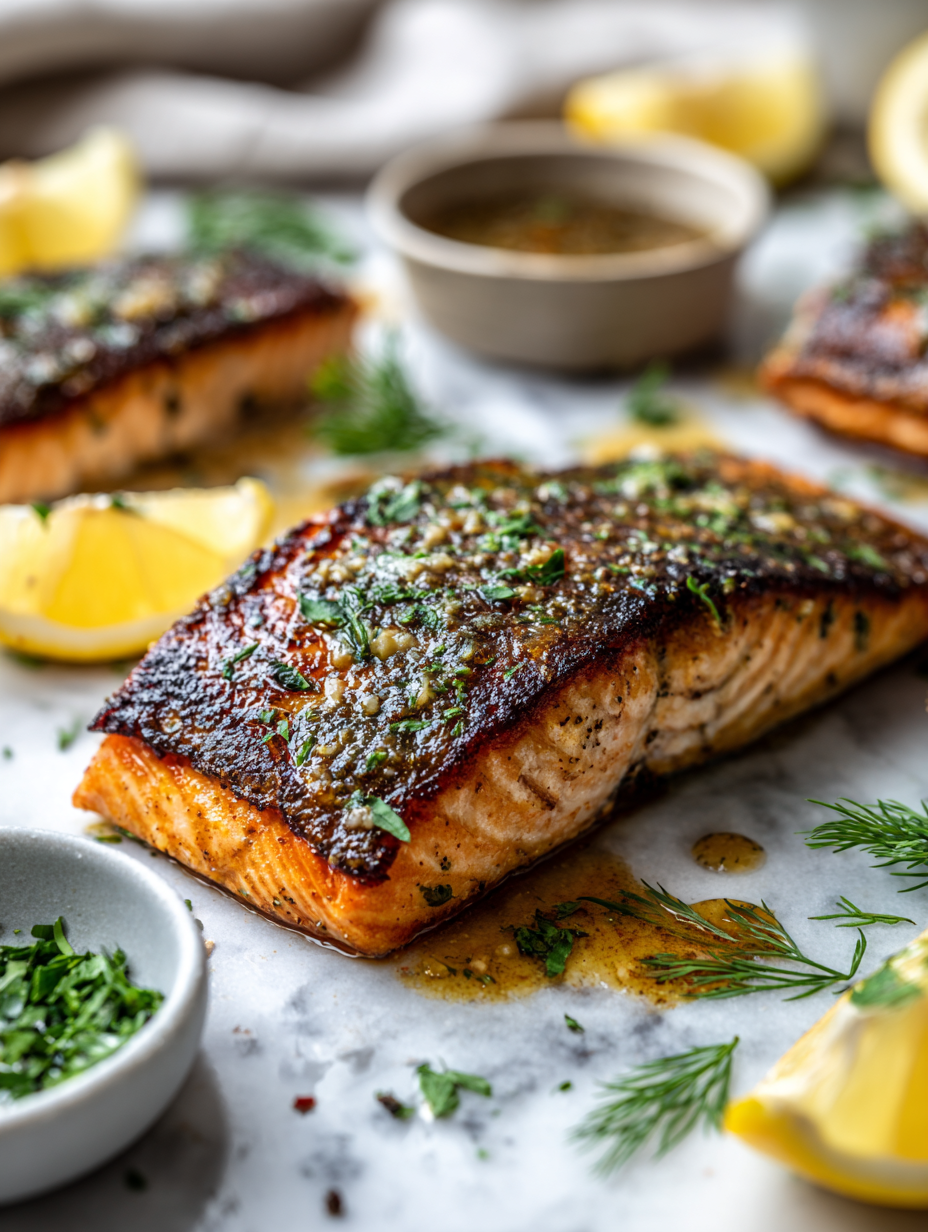
Crispy Skin Salmon
Ingredients
Equipment
Method
- Pat the salmon fillets thoroughly dry with paper towels, especially focusing on the skin, until no moisture remains. This step is crucial for achieving a crispy crust.
- Generously season both sides of the fillets with coarse sea salt, pressing the salt into the skin to help draw out excess moisture and enhance flavor.
- Place a non-stick or stainless steel skillet on the stove over medium-high heat and let it warm up for about 2-3 minutes until a few water droplets sizzle and evaporate immediately when flicked onto the pan.
- Add 1 to 2 tablespoons of neutral oil to the hot pan, swirling to coat the surface evenly. The oil should shimmer and just start to smoke slightly.
- Gently lay the salmon fillets skin-side down into the hot oil, pressing lightly with a spatula for 10 seconds to prevent curling and ensure full contact with the pan.
- Cook undisturbed for 4-5 minutes, watching as the skin turns a deep golden brown and develops a crackling sound. The fish will start to turn opaque about halfway up.
- Use tongs or a spatula to carefully flip the fillets over and cook for an additional 2-3 minutes, just until the flesh is opaque and flakes easily, but still moist inside.
- Remove the salmon from the pan and transfer to a plate. Squeeze fresh lemon wedge over the fillets for brightness, if desired, and serve immediately to enjoy the crispy skin and tender, flaky flesh.
Notes
Pro tips for perfect crispy skin
- Dry skin thoroughly: Use paper towels to pat the salmon skin until no moisture remains; moisture prevents crispiness.
- Start with a hot pan: Heat your skillet until a few water droplets sizzle and evaporate immediately, ensuring a quick sear.
- Press down when placing fish: Gently press the fillet into the pan for 10 seconds to prevent curling and promote even contact.
- Don’t move too soon: Let the skin crisp undisturbed for 4-5 minutes; patience builds that deep, crackly crust.
- Flip carefully: Use a spatula or tongs, and flip when the skin is golden and releases easily; avoid tearing.
- Finish with a gentle touch: Cook the other side just until opaque, about 2-3 minutes, to keep the flesh moist and tender.
- Rest briefly after cooking: Rest for 2 minutes to allow juices to redistribute, then serve immediately for maximum texture.
Common mistakes and how to fix them
- FORGOT to dry the salmon skin thoroughly—causes sogginess, fix by patting dry again.
- DUMPED oil too early—wait until pan and oil are hot for crisp sear.
- OVER-TORCHED the skin—reduce heat slightly, and watch closely to prevent burning.
- UNDERCOOKED the fish—check for opaque flesh and flaky texture, cook a minute longer if needed.
Quick fixes and pantry swaps
- IF/WHEN skin isn’t crisp enough—splash with a tiny bit of oil and sear another minute.
- WHEN fish sticks—patch with a small amount of hot oil and press down gently.
- IF skin is soggy—rescue with a quick blast of high heat, then reduce to crisp again.
- WHEN oil smokes—shield with a lid briefly, then wipe the pan and start fresh.
- DUMPED oil too early—add more oil and give the skin a few seconds to crackle before flipping.
Prep and storage tips
- Pat the salmon fillet dry and season it a few hours before cooking; the surface will stay dry, promoting crispiness during sear.
- Store the seasoned fillet uncovered in the fridge for up to 24 hours to maintain dryness and freshness, which enhances skin crispness.
- Cooked salmon can be refrigerated for up to 2 days; reheat gently in a hot skillet to revive some crispness and warmth, about 1-2 minutes per side.
- For best texture upon reheating, serve immediately after warming—expect the skin to soften slightly but still retain some crunch if done carefully.
- Avoid freezing the skin-on fillet if aiming for crispy skin—freezing introduces moisture that hampers that perfect crackle.
Top questions about crispy skin salmon
1. Why is my salmon skin not crispy?
Use paper towels to thoroughly dry the skin; excess moisture prevents crispiness and causes steaming, not searing.
2. How hot should the pan be before adding salmon?
Start with a hot pan and enough oil—around 1-2 tablespoons—so the skin immediately crackles and crisps up.
3. How do I prevent the skin from curling?
Lay the salmon skin-side down gently, press lightly for 10 seconds, and cook undisturbed for 4-5 minutes until golden.
4. When is the right time to flip the salmon?
Flip carefully when the skin releases easily and is deeply golden, then cook the flesh just until opaque, about 2-3 minutes.
5. How do I know when the salmon is done?
Cook until the internal temperature reaches about 50-52°C (122-125°F), and the flesh flakes easily with a fork.
6. What if the skin sticks to the pan?
Avoid moving the fish too soon; patience is key to building a crispy, crackling skin without tearing.
7. Should I add anything at the end of cooking?
Finish with a squeeze of lemon or a pat of butter to brighten flavors and add richness, serving immediately.
8. What equipment do I need?
Use a non-stick or stainless steel skillet, and have paper towels and a spatula ready for easy handling.
9. How can I fix soggy skin after cooking?
If the skin isn’t crispy enough, increase heat slightly and sear an extra minute, watching carefully to avoid burning.
10. Can I prepare this in advance?
Reheat gently in a hot skillet for 1-2 minutes, pressing lightly to regain some crispness and warm through without sogginess.
Getting that perfect crispy skin on salmon is a small, satisfying victory. It’s a reminder that good technique and patience turn a simple piece of fish into something special.
Whenever I cook it, the smell of sizzling, golden skin and the tender, juicy flesh makes me pause and appreciate the little details that make all the difference. It’s a dish that feels both honest and indulgent, perfect for any night when you want a straightforward, impressive meal.

Hi, I’m Theo Granger, the voice and recipe creator behind Boldly Overseasoning.
If you believe salt is not the enemy, spices should be generous, and flavor should never whisper when it can sing, then you are absolutely in the right place. Boldly Overseasoning is my unapologetic celebration of big flavor, confident cooking, and trusting your instincts in the kitchen. I created this space for people who are done with bland food and ready to cook with courage.


Leave a Reply